
What Is a Winch and Why Does It Matter Industrially?
A winch winds or unwinds a rope, cable, or chain around a drum to lift, lower, pull, or position heavy loads with controlled force. At its core, a winch drive is the complete powertrain assembly that integrates a motor, gearbox, drum, and braking system into a single functional unit capable of generating high pulling force across demanding industrial environments.
In industrial contexts, the winch is far more than a simple cable-winding tool. It is a precision load-handling mechanism. It must perform reliably under extreme conditions, including high temperatures, corrosive marine environments, explosive atmospheres, and heavy-duty cycles. Industries ranging from deep-shaft mining to steel plants depend on these drives. They execute critical load movements that cranes or conveyors cannot perform.
The global industrial winch market continues to expand as capital infrastructure projects in emerging economies demand greater material handling capability. Understanding how winch drives work, the different types available, and how to select the right configuration is essential for procurement engineers, plant designers, and maintenance managers.
How Winch Drives Work
Drum, Gearbox & Motor Integration
A winch drive functions as an integrated power transmission system. The primary components are the prime mover (electric motor, hydraulic motor, or PTO shaft), a multi-stage reduction gearbox, a rope drum, and a failsafe braking system. The motor generates rotational torque, which the gearbox reduces in speed while amplifying in force before transferring it to the drum. The drum winds the steel wire rope or synthetic rope, exerting the required line pull on the connected load.
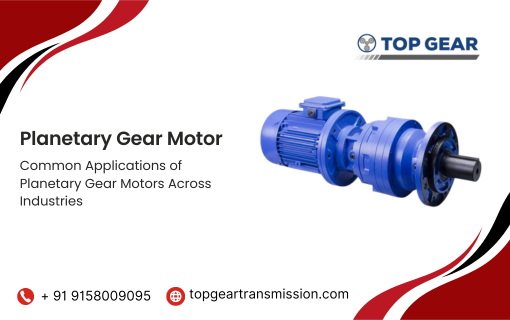
The winch drive’s gearbox typically uses a planetary or helical gear arrangement. This design achieves very high reduction ratios within a compact housing. Engineers prefer planetary gear stages in heavy-duty winch drives. They distribute the load across multiple planet gears, which increases torque density and reduces bearing stress. Depending on line speed and pull requirements, gear ratios can range from 20:1 to over 500:1.
Load Pulling Mechanism
When the winch operates, the motor spins the gearbox input shaft. After multi-stage reduction, the gearbox output shaft rotates the drum at a controlled, lower speed. The rope wound on the drum unwinds (paying out) or winds (hauling in) to move the attached load.A spring-applied, hydraulically or electrically released disc or band brake automatically engages when the motor de-energizes, holding the load securely and preventing runaway during a power failure.
The effective line pull of a winch decreases as more rope layers accumulate on the drum, since the larger effective drum radius reduces the mechanical advantage. Engineers therefore specify the first-layer line pull as the rated capacity, and account for multi-layer derating in the application design.
Types of Industrial Winches
Electric Winch
An electric winch uses an AC or DC electric motor as the prime mover. It offers precise speed control (especially when paired with a variable frequency drive), clean operation, and straightforward integration with automation systems. Electric winch drives are best suited for applications where grid power is accessible and the environment is relatively clean. Common sectors include material handling, construction hoisting, steel plants, and theatre rigging. They are available in enclosure classes from IP55 to IP66 for outdoor and wash-down environments.
Hydraulic Winch
A hydraulic winch uses a hydraulic motor fed by a pump circuit as the prime mover. It delivers exceptionally high torque at very low speeds and can sustain continuous full-load duty cycles without overheating, making it the preferred choice for heavy offshore, marine, and mining applications. The hydraulic winch also offers inherently smooth, stepless speed control through hydraulic valve modulation, and is inherently compatible with ATEX hazardous area requirements since there are no electrical components at the point of actuation.
Engineers widely specify hydraulic winches for offshore mooring systems, subsea construction vessels, drilling rigs, and anchor-handling tug supply (AHTS) vessels requiring continuous pulling forces over 100 tonnes.
Mechanical / PTO Winch
A mechanical or power take-off (PTO) winch draws power directly from a vehicle or machine engine via a PTO shaft and gearbox. It eliminates the need for a separate motor, and operators commonly fit it to all-terrain trucks, forestry equipment, recovery vehicles, and mobile cranes. Mechanical winch drives can include an idle gear reverse mechanism, allowing operators to change the drum direction without reversing the engine.
Air / Pneumatic Winch
A pneumatic winch uses compressed air to drive a vane or piston motor. It is the safest option in highly explosive or flammable environments where neither electrical nor hydraulic systems are practical. Pneumatic winch drives are used in chemical plants, petrochemical facilities, and underground coal mines. They are inherently speed-regulated by air pressure and offer natural overload protection.
Key Technical Specifications
Selecting the correct winch drive requires a thorough understanding of its technical parameters. Below are the critical specifications to evaluate:
| Parameter | Specification |
| Capacity (Line Pull) | 2,500 N to 500,000 N |
| Line Speed | 0.1 m/min to 50 m/min |
| Rope Length | As per customer requirement |
| Rope Diameter | As per customer requirement |
| Mounting Type | Foot or side mounting |
| Brake Type | Failsafe brake (integrated or external) |
| Motor Compatibility | Electric, Hydraulic, Mechanical (PTO), Pneumatic |
| IP Class (typical) | IP55 to IP67 (application dependent) |
| Gear Ratio | High reduction in compact housing |
Line Pull
Line pull is the rated pulling force, expressed in Newtons (N) or kilonewtons (kN), that a winch can exert on the rope at the first layer on the drum. Industrial winch drives are available from 2,500 N (approximately 0.25 tonnes) to 500,000 N (50 tonnes) and beyond for specialised marine applications.
Rope Capacity
Rope capacity refers to the total length of rope the drum can accommodate at a given diameter. For a given drum geometry, a smaller rope diameter allows a longer rope. Engineers specify rope diameter based on the minimum breaking load (MBL) requirement, with a standard safety factor of 5:1 for most industrial winch applications and 6:1 or higher for personnel-adjacent lifting.
Gear Ratio
The gear ratio determines the relationship between input speed (motor RPM) and output speed (drum RPM), and inversely affects the torque multiplication. A higher gear ratio results in lower drum speed but greater available torque, which is appropriate for heavy-load, slow-haul applications. Modern planetary winch gearboxes achieve the highest reduction ratio in the smallest possible envelope, making them ideal for space-constrained installations.
IP Class
The Ingress Protection (IP) rating, defined under IEC 60529, specifies the level of protection the winch enclosure provides against dust and water. IP55 offers protection against dust deposits and water jets, while IP67 provides full dust-tight protection and short-term immersion. Marine winch drives are typically designed with corrosion-resistant materials and coatings in addition to a high IP rating, to withstand salt spray and continuous wet conditions.
Industrial Applications
Mining & Underground Operations
In mining, winch drives perform some of the most demanding tasks in industry: ore skip hoisting, shaft sinking, drill mast positioning, bucket wheel reclaimer drives, and dragline anchoring. Underground winch drives must comply with mining safety standards and typically require ATEX or IECEx certification when operating in methane-bearing seams. High-capacity winches are also used to pull heavy equipment through confined underground roadways where cranes cannot operate.
Marine & Offshore
Marine applications represent one of the largest demand segments for winch drives, with specific requirements for corrosion resistance, high duty cycle, and reliability in remote offshore conditions. Anchor winch systems, mooring winch units, towing winch assemblies, and ship loader winch mechanisms all rely on purpose-engineered marine-grade winches. The hydraulic winch dominates offshore mooring and subsea construction applications due to its ability to sustain continuous full-load operation without thermal limitations.
Construction & Infrastructure
Construction sites use winch drives extensively for skip bucket conveyors, concrete bucket hoisting, formwork raising and lowering, and equipment positioning on high-rise facades. Mobile cranes utilise PTO-driven winch assemblies for load handling, while pick-and-carry cranes integrate compact winch gearboxes directly into the crane superstructure.
Oil & Gas
In oil and gas facilities, winch drives are deployed for drilling rig drawworks, pipe-handling operations, wellhead maintenance, and pipeline laying vessel tensioners. Given the presence of flammable hydrocarbons, hydraulic winch systems and pneumatic winch drives are commonly specified for ATEX Zone 1 and Zone 2 classified areas. Compliance with API and ISO standards is mandatory in this sector.
Hydraulic Winch vs Electric Winch – Which Should You Choose?
Selecting between a hydraulic winch and an electric winch depends on several critical factors: the required duty cycle, available power source, load capacity, environment, and control precision. The table below provides a structured comparison:
| Parameter | Electric Winch | Hydraulic Winch |
| Power Source | Electric motor | Hydraulic motor |
| Best For | Precise speed control, indoor/clean environments | Continuous heavy-duty, explosive/wet environments |
| Load Capacity | Up to ~50 tonnes | Up to 500 tonnes+ |
| Speed Control | Excellent (VFD compatible) | Smooth, stepless via valve |
| Duty Cycle | Intermittent to continuous | Continuous |
| Maintenance | Lower (fewer moving parts) | Moderate (hydraulic circuit) |
| Environment | IP55–IP65 typical | Suitable for ATEX zones |
| Operating Noise | Low to moderate | Moderate (pump noise) |
In general, an electric winch is the preferred choice for indoor or infrastructure applications where grid power is available, precise positioning is required, and the duty cycle is intermittent to medium. A hydraulic winch is the preferred choice for heavy offshore, marine, and extractive industry applications where continuous operation, extreme loads, or hazardous atmospheres are involved.
Safety Standards & Certifications for Winch Drives
Industrial winch drives are subject to a range of international and national standards that govern design, manufacturing, testing, and operation. Key standards include:
- IS 3938 – Indian standard for electric hoists and winches, specifying design, testing, and performance requirements.
- ISO 4308 – Selection of steel wire ropes for cranes and winch applications.
- IEC 60529 – International standard for IP enclosure ratings applicable to winch drive housings.
- IECEx / ATEX Directive – Certification requirements for winch equipment used in explosive atmospheres.
- DNV GL / Bureau Veritas – Marine classification society standards for offshore and shipboard winch equipment.
- FEM 1.001 – European standard for classification of mechanisms in cranes and winch drives by load spectrum and operating frequency.
Compliance with these standards ensures that a winch drive is designed with appropriate safety factors, failsafe braking, and structural integrity for the intended duty class.
Top Gear Transmission’s Winch Drive Solutions
For procurement engineers and plant designers evaluating industrial winch solutions, the gearbox and transmission engineering behind the winch drive is as important as the winch mechanism itself. Top Gear Corporation Limited, a Maharashtra-based precision gearbox and drive manufacturer, offers a comprehensive range of winch drives available in electric, hydraulic, mechanical, and pneumatic configurations.
Their winch drive product range covers loading capacities from 0.5 tonnes to 50 tonnes, with line speeds from 0.1 m/min to 50 m/min, and capacity ratings from 2,500 N to 500,000 N. Key engineering features include:
- Multiple drum mounting configurations (housing-driven or shaft-driven)
- Failsafe brake integrated within the gearbox or mounted externally
- Foot or side mounting options for flexible installation
- Adaptable to multiple prime movers simultaneously
- Mechanical winch variants with idle gear reverse mechanism
- Marine-grade winch designs with corrosion-resistant materials and coatings
- Rope guide arrangement available on request
Applications served by their winch drives include skip bucket conveyors in construction machinery, furnace door opening in steel plants, drilling rigs and bucket wheel reclaimers in mining, ship loaders in marine terminals, and mobile cranes and pick-and-carry cranes in material handling.
Conclusion
The winch drive is an indispensable component of heavy industrial infrastructure, enabling the controlled movement of loads that would otherwise be impossible to handle safely or efficiently. Whether in a deep underground mine, an offshore mooring system, a steel plant’s furnace bay, or a construction site’s skip hoisting rig, the winch performs a function that is both mechanically demanding and operationally critical.
Choosing the correct winch drive the right type, capacity, gear ratio, mounting configuration, and environmental rating requires a disciplined engineering evaluation of the application’s load profile, duty cycle, power source, and operating environment. A well-specified winch drive will deliver decades of reliable service with minimal maintenance.
For industrial buyers and engineers looking for a proven partner in winch drive technology, Top Gear Corporation Limited brings deep manufacturing expertise, a wide range of product configurations covering loads from 0.5 to 50 tonnes, and the engineering capability to develop bespoke solutions for the most demanding applications from marine-grade corrosion resistance to ATEX-compatible hydraulic configurations.