
In the modern industrial landscape, the push toward “Industry 4.0” has turned assembly lines into high-speed, hyper-precise ecosystems. At the core of this transformation is a component that often goes unnoticed until it fails: the assembly gearbox.
Whether it is a robotic arm in an automotive plant or a high-speed filling line in a pharmaceutical facility, the gearbox assembly is the bridge between raw electrical power and controlled mechanical motion. This comprehensive guide explores the nuances of assembly gearboxes, their technical importance in industrial automation, and how to select the right system for peak performance.
Defining the Assembly Gearbox in Automation
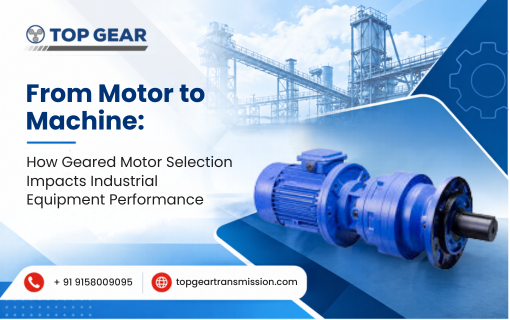
An assembly gearbox is more than just a collection of gears; it is a sophisticated mechanical transmission system designed to modify the output of an electric motor. Its primary functions are to reduce speed and increase torque while maintaining the highest possible level of positional accuracy.
In the context of industrial automation, “assembly” refers to the integrated nature of these units. Unlike standalone gears, an assembly gearbox is often pre-engineered to interface perfectly with servo motors or AC/DC motors, providing a “plug-and-play” solution for complex machinery.
Why Gearboxes are Non-Negotiable
Without a high-quality gearbox, a motor would have to be prohibitively large to generate the torque required to move heavy industrial loads. The gearbox allows engineers to use smaller, more efficient motors that run at higher speeds, which the gearbox then converts into the powerful, slow-moving force needed for heavy lifting or precise positioning.
Key Types of Gearbox Assemblies
Different automation tasks require different mechanical behaviors. Understanding the “anatomy” of these gearboxes helps in choosing the right one for your specific assembly line.
A. Servo Planetary Gearboxes
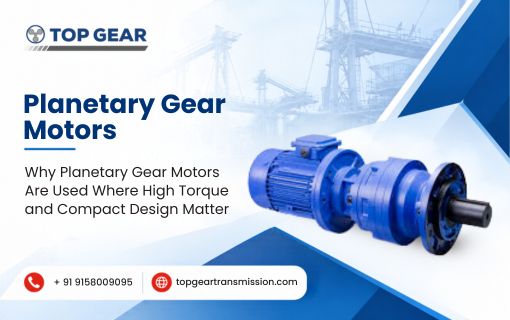
The “gold standard” for precision automation. In a planetary system, a central “sun” gear drives multiple “planet” gears contained within an outer “ring” gear.
- Best for: Robotics, CNC machines, and pick-and-place systems.
- Advantage: They offer incredibly high torque density and minimal backlash (the tiny gap between gear teeth), which is essential for precision.
B. Helical Gear Assemblies
Helical gears are cut at an angle to the face of the gear. This allows the teeth to engage gradually rather than all at once.
- Best for: High-speed applications and continuous-duty cycles.
- Advantage: They are much quieter and smoother than spur gears, making them ideal for environments where noise reduction is a priority.
C. Worm Gear Reducers
Worm gears consist of a “worm” (a gear in the form of a screw) that meshes with a “worm wheel.”
- Best for: Conveyor systems and heavy lifting.
- Advantage: They can provide massive reduction ratios in a single stage and possess a “self-locking” feature, preventing the load from back-driving the motor in the event of a power failure.
D. Right-Angle Gearboxes
In many automation setups, space is a luxury. Right-angle gearboxes allow the motor to be mounted perpendicular to the drive shaft, saving significant floor space.
The Role of Precision in Industrial Automation
When we look at the specifications of a high-end assembly gearbox, two terms appear constantly: Backlash and Torsional Stiffness.
Understanding Backlash
Backlash is the amount of clearance between mated gear teeth. In a standard gearbox, a little backlash is fine. However, in an automated assembly gearbox, backlash must be near zero.
Why? Imagine a robotic arm welding a car frame. If there is even a 0.5-degree “play” in the gearbox, the weld could be several millimeters off-target, resulting in a scrapped part.
Efficiency and Thermal Management
Modern gearboxes, such as those featured by industry leaders like Top Gear Corporation Limited, are designed for 95% to 98% efficiency. Higher efficiency means less energy is lost as heat. In 24/7 manufacturing environments, excessive heat can break down lubricants and lead to premature bearing failure.
Critical Applications Across Industries
The “assembly gearbox” is a versatile tool found in nearly every sector of the global economy:
1. Automotive Manufacturing
From the stamping press to the final assembly line, gearboxes drive the heavy-duty conveyors and the precise robotic welders that build our vehicles. The high radial load capacity of planetary gearboxes makes them ideal for handling heavy car chassis.
2. Food and Beverage
In this industry, gearboxes must be both precise and hygienic. Stainless steel assembly gearboxes with specialized coatings are used in bottling and packaging lines to ensure they can withstand high-pressure washdowns without rusting or leaking oil into the product.
3. Pharmaceuticals
Precision is the top priority here. Gearboxes drive the machines that blister-pack pills or fill vials at speeds of thousands of units per hour. Any vibration or loss of synchronization could result in damaged medication or incorrect dosages.
4. Material Handling and Warehousing
With the rise of automated warehouses (like those used by Amazon), assembly gearboxes power the automated guided vehicles (AGVs) and sorting systems that move millions of packages daily.
How to Select the Perfect Assembly Gearbox
Choosing a gearbox isn’t just about picking a ratio; it’s about analyzing the entire mechanical system. Here is a checklist for engineers and procurement managers:
- Determine the Output Torque: Calculate both the “Nominal Torque” (normal running) and the “Emergency Stop Torque” (the maximum force the gearbox might face if the machine jams).
- Check Radial and Axial Loads: Will the gearbox be supporting the weight of a heavy pulley or drive belt? If so, the internal bearings must be rated for those specific forces.
- Service Factor: If your machine runs 24/7 with frequent starts and stops, you need a higher service factor to ensure the gearbox doesn’t wear out prematurely.
- Environmental Protection: Does the unit need an IP65 or IP67 rating? If you are working in a dusty cement plant or a wet food plant, the sealing of the gearbox is just as important as the gears inside.
Maintenance: Ensuring Longevity
Even the best-engineered assembly gearbox requires care. To avoid unplanned downtime, follow these three pillars of maintenance:
- Lubrication Management: Most modern precision gearboxes are “lubricated for life.” However, for larger industrial units, regular oil changes and synthetic lubricant top-offs are vital to reduce friction.
- Vibration Analysis: By using sensors to monitor the vibration of a gearbox, maintenance teams can predict a bearing failure weeks before it actually happens.
- Seal Inspection: The most common cause of gearbox failure is the loss of lubricant through a worn seal. Regular visual inspections can save thousands of dollars in repair costs.
The Future: Smart Gearboxes and Industry 4.0
The next generation of assembly gearboxes is getting “smart.” We are now seeing the integration of IoT sensors directly into the gearbox housing. These sensors monitor temperature, torque, and vibration in real-time, sending data to the cloud.
This allows for Predictive Maintenance, where the machine itself tells the operator, “I need a part replaced in 200 hours,” rather than waiting for a catastrophic breakdown.
Conclusion: Driving the Future of Production
The assembly gearbox is the silent workhorse of the industrial world. As automation becomes more complex, the demands on these mechanical systems will only increase. By selecting high-quality, high-precision gearboxes, manufacturers can ensure their operations are faster, more accurate, and more cost-effective.
When you invest in a superior gearbox assembly, you aren’t just buying hardware you are buying the reliability and precision that keeps your production line moving toward the future.