
What Is a Bar Bending Machine?
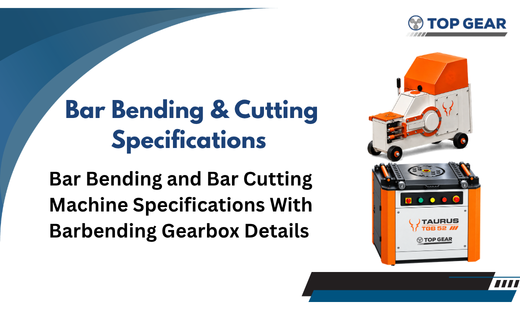
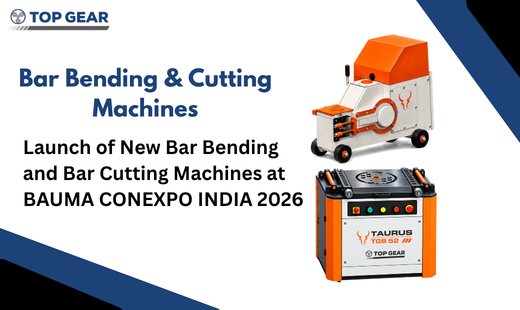
A bar bending machine is construction equipment used to bend steel reinforcement bars (rebar/TMT bars) into precise angles and shapes required for reinforced concrete structures. It is a standard fixture on construction sites, precast concrete yards, and rebar fabrication facilities, replacing manual bending with a mechanised process that delivers consistent bend angles, repeatable radii, and significantly higher throughput.
At the heart of every bar bending machine lies its gearbox — the component responsible for converting the motor’s high-speed, low-torque output into the very high torque, low-speed rotation needed to bend thick steel bars without stalling or damaging the drive train.
Role of the Gearbox in a Bar Bending Machine
Torque Transmission
Bending a 32 mm TMT bar requires substantial rotational force at the bending disc. The gearbox in a bar bending machine multiplies the motor’s input torque through a high reduction ratio, delivering the force needed at the bending pin without requiring an oversized, energy-inefficient motor.
Speed Reduction
Electric motors typically operate at 1,440–2,880 RPM, far too fast for controlled bar bending. The gearbox reduces this to a working speed of roughly 5–15 RPM at the bending disc, giving the operator precise control over bend angle and dwell time while protecting the bar from over-stress or cracking at the bend point.
Planetary Gearbox Design for Bar Bending Applications
Why Planetary Gearboxes Are Preferred
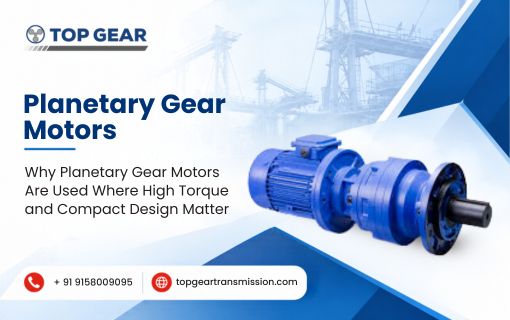
A planetary gearbox is the preferred configuration for a bar bending machine because of its compact size relative to torque output and its ability to absorb the shock loading that occurs at the moment of bend initiation, when resistance from the bar spikes sharply. The planetary arrangement distributes this shock load across multiple planet gears rather than concentrating it on a single gear mesh, extending gearbox service life under repeated impact loading.
Gear Ratio Selection
Gear ratio selection for a bar bending machine gearbox depends on the maximum bar diameter the machine is rated for and the motor’s power output. Larger bar diameters (25–40 mm) require higher reduction ratios to generate adequate torque, while smaller-capacity machines (up to 16 mm) can operate with comparatively lower ratios and higher bending disc speeds for faster cycle times.
Load & Duty Cycle Considerations
Construction site bar bending machine gearboxes typically operate under intermittent duty with frequent direction reversal — bending, then returning to the home position. The gearbox design must handle repeated bidirectional torque reversal. This prevents backlash accumulation, which would otherwise degrade bend angle accuracy over time.
Key Technical Specifications
Output Torque, Speed, Power Rating
| Parameter | Typical Specification |
| Output Torque | Several hundred to 1,000+ Nm depending on bar capacity |
| Bending Disc Speed | 5 RPM to 15 RPM |
| Motor Power | 1.5 kW to 5.5 kW (typical site-duty range) |
| Gear Ratio | High reduction (application-dependent, often 40:1 to 100:1+) |
| Duty Type | Intermittent, bidirectional, shock-loaded |
Mounting & Shaft Configuration
Manufacturers typically foot-mount or flange-mount the bar bending machine gearbox to the base frame, directly coupling a vertical output shaft to the bending disc. This vertical orientation requires specific housing and seals to handle axial loads and prevent lubricant migration.
Types of Bar Bending Machines & Matching Gearboxes
Manual Bar Benders
Manual or hand-operated bar benders use simple mechanical leverage rather than a powered gearbox, suitable for low-volume, small-diameter bar bending in light construction work.
Electric Bar Benders
Electric bar bending machine units are the standard on most construction sites, pairing an electric motor with a planetary or worm-helical gearbox sized to the machine’s rated bar capacity, typically 6 mm to 40 mm diameter.
CNC Bar Bending Machines
CNC bar bending machine systems integrate servo motors with precision planetary gearboxes featuring minimal backlash, enabling programmable, repeatable bend sequences for high-volume precast and rebar fabrication operations.
Construction Industry Applications
Reinforced concrete construction relies extensively on the bar bending machine. Teams use it for high-rise buildings, bridges, dams, and precast element fabrication. Rebar yards use higher-capacity, gearbox-driven machines for continuous, high-throughput bending. This speeds up production for the stirrups, links, and structural shapes needed in column and beam reinforcement cages.
Maintenance Tips for Bar Bending Gearboxes
- Inspect gear oil level and condition at scheduled intervals, replacing lubricant per the manufacturer’s recommended duty-cycle schedule
- Check for backlash accumulation, particularly in machines with frequent direction reversal
- Verify shaft seal integrity to prevent contamination from site dust and debris
- Inspect mounting bolts and bending disc coupling for tightness after heavy-use periods
- Monitor for unusual noise or vibration, which often indicates bearing wear or gear tooth damage
Top Gear Transmission’s Construction Gearbox Solutions
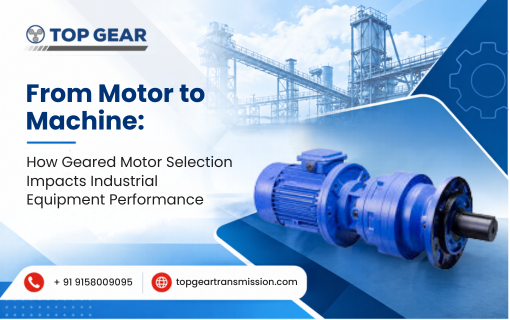
Top Gear Corporation Limited supplies planetary gearboxes and planetary geared motors for construction machinery. These solutions drive bar and pipe bending machines as part of their broader material handling range. Their modular planetary platform offers power outputs from 0.17 kW to 75 kW. It also provides torque capacities from 100 Nm to 1,000 kNm to match light-duty to heavy industrial demands.
Key engineering features for bar bending applications include a high torque-to-weight ratio from modular construction. Rugged housings easily withstand harsh job site conditions. Furthermore, the platform adapts to various motor frame sizes and voltages, while individually replaceable components simplify field maintenance.
Conclusion
The gearbox is the engineering core of every bar bending machine, converting available motor power into the high torque, controlled-speed rotation needed to bend reinforcement steel accurately and repeatably. Planetary gearbox design, correctly matched gear ratio, and disciplined maintenance together determine how reliably a bar bending machine performs across its operational life on demanding construction sites.
For construction equipment manufacturers and fabricators seeking a dependable gearbox partner, Top Gear Corporation Limited’s modular planetary gearbox range offers the torque density, shock-load tolerance, and rugged construction needed to keep bar bending and related construction machinery running reliably.