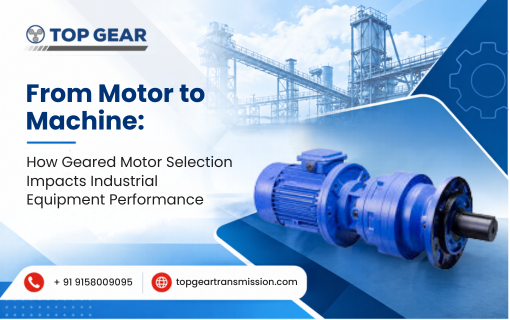

A geared motor is a self-contained drive unit that combines an electric motor with a gearbox in a single, compact assembly. This integration allows the system to deliver higher torque at reduced speeds, making it an essential component across a wide spectrum of industrial machinery and automation applications.
In essence, a geared motor eliminates the need for separate motor-gearbox coupling, reducing installation complexity, footprint, and mechanical losses. Whether you are driving a conveyor belt, a robotic arm, or a mixing unit, a geared motor provides the precise speed-torque balance your application demands.
The global demand for geared motors continues to rise as industries increasingly move towards automation, precision manufacturing, and energy-efficient drive systems.
How Does a Geared Motor Work?
Motor + Gearbox Integration
A geared motor consists of two primary components: an electric motor (AC, DC, or servo) and a gearbox (or gear reducer). The motor generates rotational energy, which is then fed into the gearbox. The gearbox uses a set of meshing gear teeth arranged in specific ratios to convert the high-speed, low-torque output of the motor into a low-speed, high-torque output suitable for mechanical work.
The mechanical interface between the motor shaft and gearbox input shaft ensures minimal energy loss during transmission. Modern geared motors are precision-engineered to maintain tight tolerances, reducing backlash and improving repeatability in motion control systems.
Torque & Speed Relationship
The fundamental principle governing a geared motor is the inverse relationship between torque and speed. When the gear ratio increases:
- Output speed decreases proportionally
- Output torque increases proportionally (minus mechanical efficiency losses)
- Power remains relatively constant across the transmission
For example, a geared motor with a 10:1 gear ratio will reduce the motor’s 1,500 RPM output to 150 RPM, while multiplying the torque approximately tenfold. This is precisely why geared motors are preferred in applications requiring controlled, powerful movement.
Types of Geared Motors
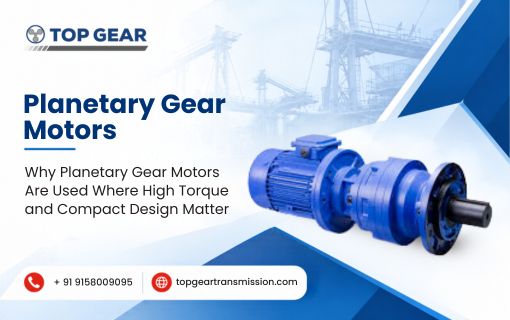
Planetary Geared Motor
A planetary geared motor uses a central sun gear, multiple planet gears rotating around it, and an outer ring gear. This concentric design distributes load across multiple gear meshes simultaneously, resulting in:
- Higher torque density in a compact footprint
- Greater efficiency (up to 97–98%)
- Superior torsional rigidity and low backlash
The planetary geared motor is the preferred choice for robotics, precision CNC machinery, servo-driven axes, and any application requiring accurate positioning. Its coaxial design also makes integration into tight machine layouts straightforward.
Helical Geared Motor
Helical geared motors use angled gear teeth that engage progressively, producing smoother and quieter operation compared to spur gears. They are well-suited for continuous-duty applications such as conveyors, compressors, and pumps, where noise reduction and smooth torque delivery are priorities. Helical geared motors are available in inline and right-angle (helical bevel) configurations.
Worm Geared Motor
A worm geared motor uses a worm screw meshing with a worm wheel to achieve high gear ratios in a compact package. The design inherently provides self-locking capability, making it ideal for applications such as lifts, gates, and hoists where holding a load without braking power is required. Efficiency is lower than helical variants, typically 50–90% depending on ratio.
Bevel Helical Geared Motor
Bevel helical geared motors combine bevel gears (for right-angle transmission) with helical stages for smooth power flow. They are widely used in heavy-duty applications including mixers, agitators, extruders, and bucket elevators where right-angle drive at high torque is required.
Key Specifications to Consider
When selecting a geared motor, the following parameters are critical:
- Torque (Nm): The output torque required by your load, including starting and peak torque demands.
- Output Speed (RPM): Determine the required shaft speed and select a gear ratio accordingly.
- Mounting Configuration: Foot-mounted, flange-mounted, shaft-mounted, or torque-arm configurations based on machine design.
- IP Rating: Ingress Protection (IP) rating indicates resistance to dust and moisture. Applications in food processing or outdoor environments typically require IP65 or higher.
- Service Factor: A safety multiplier accounting for shock loads, duty cycles, and starting frequency.
- Motor Type: AC induction, DC, brushless DC, or servo motor, depending on control requirements and power supply.
Industrial Applications of Geared Motors
Conveyor Systems
Geared motors are the workhorse of conveyor systems across logistics, food processing, automotive assembly, and packaging lines. Their ability to deliver consistent torque at controlled speeds ensures smooth material flow and reliable throughput.
Mixers & Agitators
In chemical processing, pharmaceuticals, and food & beverage industries, geared motors drive mixing and agitation equipment. Bevel helical and worm geared motor types are especially common here, delivering the sustained high torque required to blend viscous materials.
Material Handling
Cranes, hoists, and lifting platforms rely heavily on geared motors for controlled vertical movement. Self-locking worm geared motors are particularly valued in overhead cranes and stacker mechanisms for their inherent load-holding capability.
Robotics & Automation
The planetary eared motor dominates robotics and automation due to its compact size, high precision, and low backlash. Joint actuators in collaborative robots (cobots), pick-and-place arms, and AGVs all rely on planetary variants for their precise motion control capabilities.
Geared Motor vs Standard Motor – Key Differences
| Parameter | Geared Motor | Standard Motor |
|---|---|---|
| Output Speed | Low (controlled by ratio) | High (rated motor speed) |
| Output Torque | High | Lower |
| Footprint | Compact (integrated) | Larger (separate gearbox needed) |
| Installation | Plug-and-play | Requires alignment & coupling |
| Applications | Conveyors, robots, hoists | Fans, pumps, direct drives |
How to Select the Right Geared Motor for Your Application
Choosing the correct geared motor involves a systematic approach:
- Define your load torque requirements: Calculate running torque and factor in shock or start-up torque with an appropriate service factor.
- Determine output speed: Identify the required RPM at the driven shaft and calculate the gear ratio needed.
- Select the gear type: Use a planetary geared motor for precision and compactness; helical for smooth continuous operation; worm for high-ratio self-locking; bevel helical for right-angle heavy-duty drives.
- Consider environmental conditions: Select the appropriate IP rating, temperature range, and housing material for your operating environment.
- Match the motor type to your control system: Variable speed applications require inverter-duty motors; precise positioning requires servo geared motors.
- Verify mounting and output shaft configuration: Ensure the geared motor physically fits and connects to your machine without additional adapters.
Working with an experienced supplier who can validate your selection calculations helps avoid costly misapplication and downtime.
Top Gear Transmission’s Geared Motor Range
Top Gear Transmission offers a comprehensive range of geared motors engineered for demanding industrial environments across India and global markets. The product portfolio includes:
- Planetary Geared Motors – Compact, high-precision units for robotics, automation, and servo applications
- Helical Geared Motors – Inline and right-angle configurations for conveyors, compressors, and general industrial drives
- Worm Geared Motors – High-ratio, self-locking designs for hoists, gates, and material handling
- Bevel Helical Geared Motors – Right-angle heavy-duty units for mixers, agitators, and bucket elevators
Each geared motor in the Top Gear Transmission range is manufactured to meet Indian and international standards, with options for custom gear ratios, mounting configurations, and motor specifications to suit your exact application.
Conclusion
A geared motor is far more than a simple drive component – it is the backbone of modern industrial automation and machinery. From the compact precision of a planetary eared motor in a robotic arm to the heavy-duty torque of a bevel helical unit driving a large mixer, the right geared motor selection makes the difference between reliable production and costly downtime.
Understanding the types, working principles, and selection criteria outlined in this guide equips you to make informed decisions for your specific application. Whether you require a standard helical unit for a conveyor line or a custom planetary geared motor for a precision automation system, matching your requirements to the right product is paramount.
For industry-leading geared motor solutions backed by engineering expertise and reliable after-sales support, explore the complete range from Top Gear Corporation Limited. With a proven track record across diverse industrial sectors, Top Gear Corporation Limited delivers the performance, durability, and application-specific customisation your operations demand.