
In the heavy machinery, material handling, and industrial automation landscapes, a singular, non-negotiable metric governs operational efficiency: reliable power transmission under extreme load. When pulling, hoisting, or positioning multi-ton assets across unforgiving environments, conventional mechanical assemblies quickly reach their structural and torque limitations. This is where high-precision winch drives and heavy-duty electric winches step into the spotlight.
Modern industrial operations require a nuanced understanding of how winch mechanics, motor types, and planetary gear systems intersect. Selecting the right winching system directly impacts your bottom line, equipment life, and safety. It is critical whether you are outfitting an offshore rig, upgrading construction cranes, or automating a factory.
What is a Winch Drive? The Core Engineering
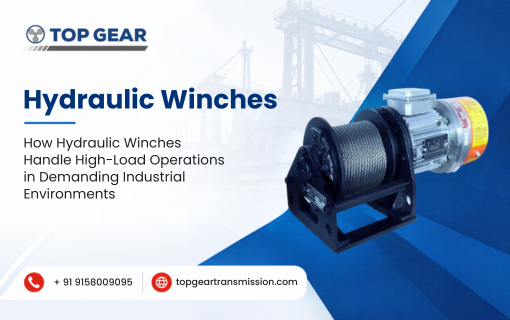
At its core, a winch drive is a specialized mechanical transmission assembly. It converts rotational energy from an electric motor or hydraulic pump into high-torque, controlled line pull. This power is transferred directly via a cable or rope drum.
Unlike basic automotive recovery winches, industrial winch drives are engineered to sustain continuous duty cycles and resist immense shock loads. The architecture typically integrates a multi-stage planetary gearbox nested directly within or adjacent to the winding drum. This design choice maximizes space efficiency while delivering unparalleled torque density.
Internal Mechanisms: Why Planetary Gearboxes Rule Winch Technology
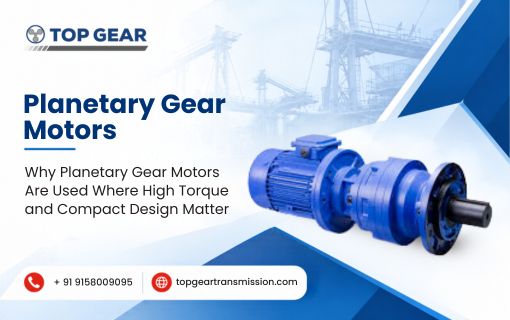
The efficiency of a modern industrial winch drive relies heavily on its gear profile. Top Gear Transmission utilizes single-stage and multistage planetary configurations where the drum is meticulously fitted at the annulus (ring gear) or the drive shaft.
The planetary arrangement distributes the input force evenly across multiple gear meshes (the sun gear, planet gears, and the outer ring gear). This load-sharing characteristic provides several distinct engineering advantages:
- High Torque Density: Able to manage massive loads within a radically compact footprint.
- Structural Integrity: Balanced internal forces reduce structural deflection and minimize wear and tear over extended lifecycles.
- Flexible Ratios: Multiple reduction stages can be stacked to yield the exact line speed and torque profile required for specific applications.
Understanding Electric Winches: Types and Technical Specifications
When evaluating prime movers for winch drives, electric systems are increasingly favored across global industries. An electric winch utilizes an electrical power system to drive its mechanical reduction gears, providing precise control, low maintenance, and highly predictable performance metrics.
Key Technical Specifications to Consider
To ensure optimal integration, engineers and project managers must evaluate critical performance parameters:
- Load Capacity (Force Rating): Ranges from 2,500 N to 500,000 N (Newton), defining the maximum pull the winch can safely exert on the first layer of rope.
- Line Speed: Variable options spanning from 0.1 m/min for hyper-precise positioning to 50 m/min for high-throughput material handling.
- Rope Accommodation: Advanced drum designs engineered for rope diameters ranging from 8 mm to 68 mm, and lengths stretching from 10 meters up to 500 meters.
- Braking Configurations: External mechanical holding brakes for electric models, often accompanied by fail-safe mechanical safety devices such as hold-back arrangements.
Comparative Analysis: Electric Winches vs. Hydraulic Winches
A frequent question facing procurement and engineering teams is whether to deploy an electric winch or a hydraulic winch. While both configurations excel at heavy-duty material handling, their operational characteristics differ significantly.
| Technical Parameter | Electric Winches | Hydraulic Winches |
| Power Source | Electrical Grid / Generator | Hydraulic Pump / Fluid Reservoir |
| Installation Complexity | Low; seamless electrical integration | High; requires hoses, valves, and fluid lines |
| Maintenance Profile | Minimal; fewer moving parts, zero fluid leaks | Medium-High; requires regular seal and fluid checks |
| Control Accuracy | High; highly compatible with modern automation/VFDs | High; governed via proportional flow control valves |
| Environmental Footprint | Clean; ideal for food and cleanroom settings | Risk of fluid leaks; requires mitigation in sensitive zones |
Electric winches stand out for their operational ease, rapid installation times, and significantly lower total cost of ownership (TCO) due to minimal maintenance demands.
Primary Industrial Applications of Winch Drives
The versatility and heavy-lifting capabilities of modern winching systems make them an indispensable asset across a wide spectrum of industrial sectors.
Marine and Offshore Engineering
In marine environments, equipment faces corrosive salt spray, extreme temperature shifts, and volatile dynamic loads. Heavy-duty winch drives handle anchoring, mooring, towing, and offshore oil rig supply operations. Self-locking configurations often supported by auxiliary worm drives ensure that loads remain securely locked even during sudden power disruptions.
Construction and Mobile Cranes
From pick-and-carry mobile cranes to immense derrick cranes, precise vertical hoisting is vital. Winch drives provide the controlled deceleration and high torque needed to elevate structural components safely. The drum architecture prevents multi-layer rope nesting and tangling, preserving wire rope structural integrity over thousands of cycles.
Industrial Automation and Material Handling
Within state-of-the-art factories and automated warehouses, electric winches serve as the muscle behind EOT (Electric Overhead Traveling) cranes, heavy inventory positioning systems, and automated production lines. Their ability to interface directly with variable frequency drives (VFDs) and PLC automation networks allows for millimeter-precise automated material positioning.
Mining and Underground Transport
Deep-shaft mining operations rely on winches to transport materials and equipment through highly confined, hazardous subterranean environments. Here, explosion-proof electric motors paired with enclosed, robust planetary gearboxes protect internal components from abrasive dust, moisture, and impact damage.
Critical Engineering Features for Enhanced Reliability
When selecting a premium winch drive system, look for specialized features that guarantee continuous operation under harsh field conditions:
- Multi-Layer Drum Engineering: The drum must be mathematically optimized to accommodate multiple layers of wire rope without causing crushing, deformation, or uneven spooling.
- Fail-Safe Braking Solutions: For electric winches, automatic external braking systems ensure immediate hold capability upon loss of electrical signal. For hydraulic variants, multi-disc spring-loaded, hydraulically released brakes provide maximum security.
- Free Spooling Capabilities: Essential for operations requiring manual or rapid cable deployment without engaging the primary gear train, minimizing operator fatigue and accelerating cycle times.
- Dual Drum Configurations: For complex positioning, synchronized double drum constructions allow for twin-line pulls, offering superior spatial stabilization for large loads.
How to Select the Ideal Winch System for Your Operation
Selecting an inadequate winch setup leads to premature gear failure, excessive downtime, and safety hazards. Use this step-by-step engineering framework to identify your ideal configuration:
- Calculate the Maximum Dynamic Load: Do not just plan for static weight. Factor in acceleration forces, frictional drag, and potential environmental factors (such as wind resistance or slope gradients).
- Determine the Duty Cycle: Will the winch operate intermittently (e.g., recovery operations) or continuously across multiple daily shifts (e.g., manufacturing production lines)? Continuous duty requires specialized thermal management and premium gear materials.
- Specify Line Speed Requirements: Faster line speeds require higher input horsepower and robust thermal dissipation. Ensure your power supply infrastructure can handle the corresponding peak currents.
- Assess Environmental Constraints: If your installation is located in an agricultural setting, chemical processing plant, or marine dock, look for specialized ingress protection (IP ratings), anti-corrosive coatings, and robust seal kits.
The Value of Choosing an Expert Transmission Manufacturer
A winch drive is only as dependable as the gearbox that powers it. Opting for low-cost, uncertified alternatives risks catastrophic system failures. Partnering with an industry leader like Top Gear Corporation Limited guarantees access to state-of-the-art engineering infrastructures, innovative customized designs, and comprehensive performance testing.
With decades of specialized power transmission expertise, Top Gear manufactures an elite portfolio of planetary gearboxes, geared motors, and custom-built winch solutions tailored to the exacting demands of global industries. From concept modeling to final field testing, every system is built to minimize energy loss, maximize torque delivery, and ensure long-term cost-efficiency.