
Choosing rebar machines is a technical decision. Bar diameter, tensile strength, motor power and gearbox design all affect output. A wrong match costs time on every shift.
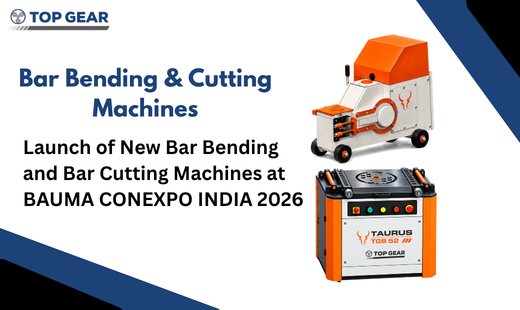
This guide gives you the full details of our new bar bending and bar cutting machines. It covers the Taurus TGB 52 and the Taurus TGC 52, with data on the other models in each range. It also explains how the barbending gearbox shapes performance.
It is written for contractors, fabricators and purchase teams. Every figure comes from our product sheets. We launched both machines at BAUMA CONEXPO INDIA 2026
Overview of the Taurus Range
Taurus is our brand of rebar processing machines. The range has two families. The TGB family bends bars. The TGC family cuts them.
Each family has three models. The TGB models are 42, 52 and 55. The TGC models are 42, 52 and 55. The two machines in the spotlight are the TGB 52 and the TGC 52. Both are CE certified products.
Bending and cutting go hand in hand. Bars are cut to length first and then bent to shape. Getting both machines from one maker keeps the specifications matched.
How a Barbending Gearbox Works
A barbending gearbox sits between the motor and the bend wheel. The motor spins fast but with low torque. The gearbox reduces the speed and multiplies the torque.
That extra torque is what bends a thick steel bar. Without it, the motor would stall at the moment of bend. The TGB 52 bend wheel turns at 9.4 RPM, which gives the operator good control.
The TGB series uses an integrated planetary gearbox with high torque output. A planetary layout spreads the load across several planet gears. This gives a compact body and long service life. Our bar bending machine gearbox guide covers the design in more depth.
Belts are a weak point in many bending machines. A belt can slip, stretch or snap under load. Our design removes the external belt, so the barbending gearbox delivers power directly and with less upkeep.
Taurus TGB 52 Bar Bending Machine Specifications
Here are the technical details of the TGB 52 as per our product sheet.
- Capacity up to 36 mm bar diameter at a tensile strength of 545 N/mm2
- Motor rating of 5 HP
- Dimensions of 860 x 700 x 815 mm in length, width and height
- Overall weight of 400 kg
- Bend wheel speed of 9.4 RPM
- Bend wheel diameter of 425 mm
- Maximum bend radius of 5D for a 32 mm bar and 4D for a 36 mm bar
- Bushes provided in 60, 70, 100, 120 and 160 mm sizes
The low overall height is a design choice. We call it the lowest height design in the market. It lets operators work in a comfortable posture.
Understanding Bend Radius and Bush Sizes
Bend radius describes how tight a bar can be bent. It is written as a multiple of the bar diameter. On the TGB 52, a 32 mm bar can be bent at 5D, and a 36 mm bar at 4D.
Bushes set the inner radius of the bend. A wider choice of bush sizes gives you more control over bend shapes. The TGB 52 ships with five sizes, and the TGB 55 ships with six.
TGB 52 Features That Help in Daily Work
- No external belt, so fewer breakdowns and lower maintenance
- Three preset bending positions for faster production
- PLC-based safety control with a tested electrical panel
- Energy-efficient IE2 motor for continuous operation
- Built-in tool storage shelf for better organization
- Robust body with a powder-coated finish
The front panel has controls for angle, power, forward, reverse and emergency stop. The TGB 52 carries an 18 months warranty.
Taurus TGC 52 Bar Cutting Machine Specifications
The TGC 52 is built for tough sections and steady output. These are the details from its product sheet.
- Maximum bar diameter of 40 mm
- Motor rating of 5 HP or 3.7 kW at 2875 RPM
- Cutting stroke of about 38 per minute
- Dimensions of 1115 x 480 x 935 mm in length, width and height
- Overall weight of 556 kg
- Oil capacity of 7 L
TGC 52 Features That Improve Cutting
- Precision-cut gears for efficient power transmission
- Leak-proof gearbox for long life and maintenance-free operation
- Impact resistance spring mechanism to avoid accidents
- Guide rollers for smooth bar handling and marking
- Hardened rod guide plate for reduced wear
- Heavy-duty hand and foot lever assembly
- Dynamically balanced flywheel for reduced vibration and noise
- Phosphorous bronze bush with internal oil groove and no external lubrication
- Protective guard cover for the motor, flywheel and components
- Wheel-mounted design for easy movement
The dynamically balanced flywheel smooths each cutting stroke and lowers vibration and noise. The phosphorous bronze bush has an internal oil groove, so it needs no external lubrication. The TGC 52 carries a 2 years warranty.
Other Models in the Range
The TGB 42 bends bars up to 32 mm. It has a 5 HP motor and weighs 350 kg. Its bend wheel turns at 9.4 RPM.
The TGB 55 bends bars up to 40 mm at a tensile strength of 780 N/mm2. It has a 7.5 HP motor and weighs 560 kg. Its bend wheel turns at 6 RPM.
The TGC 42 cuts bars up to 36 mm and makes about 60 strokes per minute. The TGC 55 cuts bars up to 40 mm with a 7.5 HP or 5.5 kW motor. It weighs 780 kg.
How to Read the Capacity Charts
Each machine has a capacity chart. It lists how many bars of each diameter the machine can process at one time. The count depends on the tensile strength of the bars.
The charts group bars by tensile strength. The groups run from 41 to 50, 51 to 60, 61 to 70 and 71 to 78 kg/mm2. Higher strength bars mean fewer bars per bend or cut.
Always check the TMT bar tensile strength on the test certificate before you operate the machine. This keeps the load within the rated capacity.
Use the chart to plan each batch. Processing several bars at once saves time on every shift.
How to Choose the Right Model
New to rebar machines? Read our explainer on how a bar bending machine works first. Then start with the largest bar diameter you process every day. Then check its tensile strength. Match both against the capacity chart for each model.
Next, look at motor power and machine weight. The 5 HP models suit standard work. The 7.5 HP models suit heavier bars. Weight matters for placement, and the TGC range is wheel-mounted for easy movement.
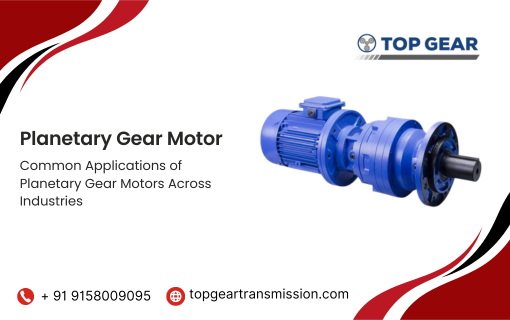
Our success stories show how the right gearbox choice changes machine performance. For drive units that power other equipment, see our planetary geared motors.
Conclusion
The TGB 52 and TGC 52 bring together strong specifications, safer controls and a compact barbending gearbox. Their data sheets make selection simple. Bar size, tensile strength and motor power tell you which model fits.
Top Gear Corporation Limited has built gearboxes for more than 25 years.
Frequently Asked Questions
What is the capacity of the TGB 52 bar bending machine?
It bends bars up to 36 mm in diameter at a tensile strength of 545 N/mm2.
What motor does the TGB 52 use?
It uses a 5 HP energy-efficient IE2 motor built for continuous operation.
What is the bend wheel speed of the TGB 52?
The bend wheel turns at 9.4 RPM and has a diameter of 425 mm.
What is a barbending gearbox and why does it matter?
It reduces motor speed and multiplies torque at the bend wheel. This lets the machine bend thick bars smoothly.
What is the maximum bar diameter of the TGC 52?
The TGC 52 bar cutting machine handles bars up to 40 mm in diameter.
What motor power does the TGC 52 have?
It has a 5 HP or 3.7 kW motor that runs at 2875 RPM.
How many cutting strokes per minute does the TGC 52 make?
It makes about 38 cutting strokes per minute.
What safety features do the machines include?
The TGB 52 has PLC-based safety control and a tested panel. The TGC 52 has an impact resistance spring mechanism and a guard cover.
What warranty is offered on the machines?
The TGB 52 has an 18 months warranty. The TGC 52 has a 2 years warranty.
How do I check bar strength before using the machines?
Check the TMT bar tensile strength on the test certificate before operation. Then compare it with the capacity chart.