
Every concrete mixer depends on its drive. The drum and the blades get most of the attention. The gear behind them does the heavy lifting.
Good concrete mixer gear turns fast motor speed into slow, strong torque that the mix can use. Poor gear leads to uneven batches, noise and early breakdowns.
This guide explains how concrete mixer gear works, which types are in use, and what to check before you buy. We have built these drives for more than two decades, so the advice comes from real production experience.
What Is Concrete Mixer Gear
Concrete mixer gear is the set of gears that carries power from the motor to the mixing element. In a drum mixer, it turns the drum. In a pan or planetary mixer, it drives the arms that blend the batch.
Motors spin fast, but mixing needs slow and heavy motion. Gears bridge that gap. They cut the speed and raise the torque.
A gear set also keeps the load steady when stiff, wet concrete pushes back on the blades. Without it, the motor would stall under the weight of a full batch.
Why Gear Quality Matters in Concrete Mixing
Concrete is heavy and abrasive. Cement, sand and aggregate wear on every moving part. The gear also takes a shock load every time a batch starts.
A well-made gear absorbs those loads without cracking or pitting. Tooth profile, material and heat treatment all play a part. Hardened alloy steel teeth resist wear far better than soft steel.
Precise machining keeps the teeth meshing evenly. That lowers noise and heat. Uneven meshing wastes power and shortens the life of the whole mixer.
Gear quality also affects the mix itself. A drive that holds its speed gives a steady mixing time. That leads to a uniform batch and consistent concrete strength.
Main Types of Concrete Mixer Gear
Ring Gear and Pinion
Many drum mixers use a large ring gear fixed around the drum. A smaller pinion meshes with it and turns the drum. This open gear system is simple and easy to inspect.
It needs regular greasing and a clean working area. Dust and grit collect on exposed teeth if they are ignored.
Helical and Spur Gear Reducers
Enclosed reducers use helical or spur gears inside a sealed housing. Helical gears mesh gradually, so they run smoother and quieter. Spur gears are simpler and handle straight loads well.
The sealed housing keeps oil in and dust out. This suits mixers that run long shifts in dusty plants.
Planetary Gear Drives
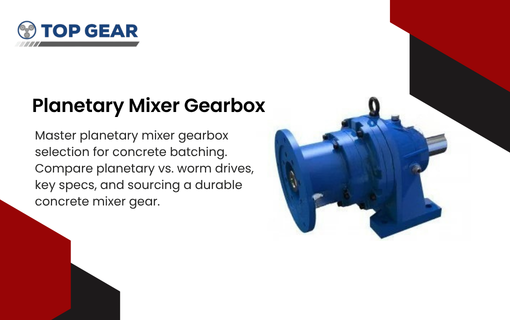
A planetary drive uses a sun gear, planet gears and a ring gear. The load is shared across several planet gears at once. That gives high torque in a compact body.
Planetary drives are the standard choice for planetary concrete mixers and pan mixers.
How a Planetary Mixer Drive Works
In a planetary concrete mixer, the mixing arm spins on its own axis. It also travels around the common axis of the gearbox. This double motion reaches every corner of the pan.
The scraper arm turns slower than the mixing arm. It clears material from the walls and pushes it back into the mix. The gear arrangement sets these speed differences.
Our planetary mixer drives are built for different mixing capacities. Concrete block and paver manufacturers use them widely. Some chemical industries use them too. You can view the full range on our planetary mixer page.
A Real Result From Our Own Projects
One of our clients used an agitator type concrete mixer. The drive came from the bottom. It needed couplings and separate bearing housings. The blades mostly pushed the concrete around, so mixing was slow and uneven.
We designed a planetary mixer drive with mixing arms and a scraper arm. The gears were arranged so the mixing arm turned faster than the scraper arm.
The client got a more uniform mix in a shorter time. The compressive strength of the concrete went up. Mixing cycle time came down. The drive was also easy to install. You can read more in our success stories.
What to Check Before Choosing Concrete Mixer Gear
The right gear saves money over the life of the machine. Review these points before you decide.
- Torque rating that covers the full batch load and the peak start-up load
- Output speed that suits the drum or arm design
- Gear material and heat treatment of the teeth
- Sealing that keeps cement dust out and oil in
- Mounting style that fits your mixer frame
- Availability of spares and technical support
Ask the supplier to confirm load and duty details in writing. A good maker studies your mixer design, batch size and duty cycle before proposing a gearbox. We work the same way.
Signs of Wear to Watch For
Gears rarely fail without warning. Watch for these signs during daily checks.
- A grinding or whining sound that was not there before
- Metal flakes or dark sludge in the gear oil
- Oil leaks around the seals or housing
- A housing that runs hotter than usual
- Slow drum or arm speed under normal load
- Pitted, chipped or worn teeth on open gears
Stop the mixer when you notice any of these. Running a damaged gear set can break teeth and harm the shaft and bearings.
Maintenance Practices That Extend Gear Life
Good maintenance keeps concrete mixer gear running for years. The routine is simple.
Check the oil level every week. Change the oil at the interval given in the maker’s manual. Use the grade the manufacturer recommends. The wrong oil raises heat and wear.
Grease open ring gears and pinions on schedule. Clean off old grease and cement build up first. Wash the mixer after every shift so slurry does not harden on seals and gears.
Tighten mounting bolts and check alignment during service. Loose mounting causes uneven tooth contact. Keep a log of oil changes and inspections. A written record makes faults easier to trace.
Common Mistakes to Avoid
Some errors show up again and again on plant floors. Undersizing the gearbox is the most common one. A unit rated for the average load can fail under peak start-up torque.
Skipping oil checks is the next mistake. Mixing oil grades is another. Over-greasing open gears traps grit and speeds up wear. Ignoring small leaks lets dust into the housing.
Delaying repairs also costs more. A worn pinion damages the ring gear it meshes with, and then both parts need replacement.
Where Concrete Mixer Gear Is Used
Batching plants use planetary and twin shaft mixers. Block and paver factories rely on planetary drives. Transit mixer trucks use drum drives. Precast yards run pan mixers for tight batch control.
We have supplied gearboxes to the construction industry for more than two decades. Our range also serves the cement industry, where reliable and low maintenance drives matter.
Conclusion
Concrete mixer gear decides how well a mixer performs day after day. The right type, correct sizing and steady care give you uniform batches and fewer stoppages.
Top Gear Transmission designs and manufactures planetary mixer drives and other industrial gearboxes from Satara, Maharashtra. Visit our planetary mixer range or contact our team to discuss your mixer drive requirements.
Frequently Asked Questions
What is concrete mixer gear?
It is the gear set that moves power from the motor to the drum or mixing arms.
What does a concrete mixer gearbox do?
It slows the motor speed and multiplies torque so the drum or arms turn steadily under load.
Which gear type suits a planetary concrete mixer?
A planetary gear drive suits it best. It shares load across several planet gears in a compact body.
How often should concrete mixer gear oil be changed?
Follow the interval in the maker’s manual. Check the oil level weekly and change it sooner if it looks dark.
What causes noise in concrete mixer gear?
Worn teeth, low oil, poor alignment and loose mounting are common causes. New grinding sounds need an inspection.