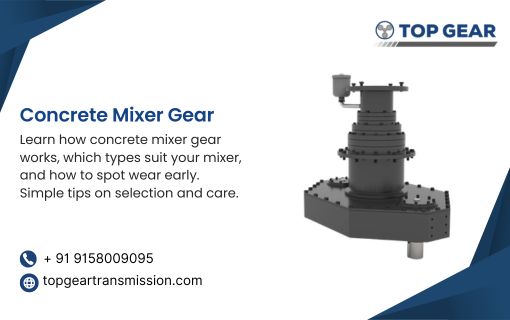

A gearbox for servo motor systems bridges the gap between fast motor speeds and the torque a machine actually needs. It reduces speed while multiplying torque, without adding play that would ruin positioning accuracy.
Servo motors spin fast and produce modest torque on their own. Most automated machines need the opposite, high torque at controlled, often slower speeds. A well matched reducer solves this mismatch while preserving the motor’s precision.
This matters because a servo motor is only as good as the mechanics carrying its motion to the load. A drive system can have an excellent controller and a well tuned motor, yet still perform poorly on the machine floor. In most cases the missing piece is a reduction stage that was chosen on ratio alone, without checking backlash, stiffness and inertia together.
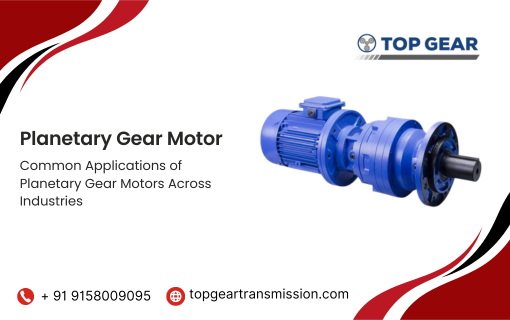
Among reduction technologies, the planetary gear motor stands out as the preferred choice for motion control work. Its design shares load across multiple gears, which keeps the unit compact and stiff. This makes it the standard choice across robotics, CNC machinery and packaging lines.
Machine builders lean on this architecture because it scales well across power ranges. The same basic gear arrangement works on a small pick and place arm and on a heavy rotary index table. Only the size of the gears and housing changes, the underlying principle stays the same.
This guide walks through the specifications that matter, the architecture choices available and where to source these components without long lead times. It is written for engineers who need a working reference, not marketing language.
For a broader look at drive geometry trade offs, see our guide comparing planetary vs helical geared motor configurations.
Why Precision Motion Systems Demand Planetary Reduction
Three specifications separate a servo grade reducer from an everyday industrial gearbox. These are backlash, torsional stiffness and inertia matching.
Backlash is the free play between meshing gear teeth before torque transfers through them. Even a small amount of backlash shows up as position error at the output shaft.
Torsional stiffness describes how much a gearbox twists under load before it responds. A stiffer gearbox reacts faster to command changes, which sharpens overall system response.
Inertia matching lines up the reflected load inertia with the motor’s own inertia. Poor inertia matching causes overshoot, oscillation and unstable positioning during rapid moves.
A multi planet load sharing design spreads torque across three or more planet gears at once. This differs sharply from a single mesh spur or worm gear arrangement.
Spur and worm designs carry the full load through one contact point. That single point wears faster and allows more backlash to develop over time.
Planetary designs share the load, so contact stress per tooth drops noticeably. The result is better repeatability, and a smaller motor can often do the same job. Engineers get to downsize the servo motor while keeping output torque and accuracy intact.
There is also a thermal benefit to sharing load across several gears. Heat generated at each mesh point is lower, which means the gearbox runs cooler under continuous duty. Cooler operation extends lubricant life and pushes out the interval between service checks.
Repeatability, not just accuracy, is what production lines actually need day to day. A machine can be accurate on a single test move and still drift across thousands of cycles if backlash grows with wear. Planetary reducers built with hardened gears and proper preload hold their specification far longer under continuous use.
Selection Matrix, Key Specifications for Servo Gearboxes
The table below compares standard planetary servo reducers against precision low backlash servo reducers across the specifications that matter most.
| Specification | Standard Planetary Servo Reducer | Precision Low Backlash Servo Reducer |
| Backlash | 3 to 8 arcmin | Under 3 arcmin |
| Torsional Rigidity | Moderate | High, minimal windup under load reversal |
| Efficiency per Stage | 92 percent to 96 percent | 95 percent to 98 percent |
| Typical Ratio Range | 3 to 1 through 100 to 1 | 3 to 1 through 100 to 1, finer ratio steps available |
| Ideal Application | General automation, conveyors | CNC axes, robotics, pick and place |
Compact Architecture, The Case for an Inline Planetary Gearbox
An inline planetary gearbox keeps the input shaft and output shaft on the same centerline. This coaxial layout lets engineers mount a servo motor directly to the gearbox.
No offset adapter plates or extra couplings are needed to bridge misaligned shafts. That saves panel space and removes several potential failure points from the drive train. Fewer coupling interfaces also mean fewer sources of backlash and vibration in the system.
Sourcing a properly matched gearbox for servo motor duty from an experienced manufacturer matters here. A gearbox chosen without proper torque and load calculations often suffers early bearing wear.
Overhung load, the force applied beyond the output bearing, is a commonly overlooked factor. A manufacturer who reviews mounting geometry and load direction before shipping prevents this failure mode. This upfront review costs little time but saves significant downtime and replacement costs later.
An inline layout also simplifies future maintenance. Technicians can pull the motor straight off the shared centerline without disturbing belts, pulleys or offset brackets. This shortens changeover time during scheduled maintenance and reduces the chance of realignment errors afterward.
Panel layout benefits from this compactness as well. Machine designers can place the drive closer to the load it moves, shortening shaft runs and cutting down on coupling stack up. Shorter, stiffer drive trains respond faster and hold tighter tolerances under dynamic loads.
Sourcing Precision Components in Maharashtra’s Automation Corridor
Maharashtra hosts one of India’s most active automation manufacturing corridors. Being close to this hub shortens lead times for custom shaft, flange and keyway work.
Automation OEMs often need last minute changes to mounting dimensions or shaft profiles. A nearby supplier can turn these modifications around in days rather than weeks. This proximity also supports smaller batch runs, which many machine builders now prefer.
Working with an established planetary gear motor supplier gives OEMs more than just parts. It gives them direct access to torque matching calculations before a purchase is finalized.
Duty cycle reviews, checking how often and how hard a gearbox will run, catch sizing errors early. These conversations, done before manufacturing starts, prevent costly redesigns after installation.
Local sourcing also helps during ramp up phases when order volumes are uncertain. A supplier within the same region can adjust batch sizes without the long ocean freight delays that come with overseas sourcing. This flexibility matters for machine builders scaling up a new product line.
Industrial Applications, Where Servo Matched Planetary Gearboxes Excel
Robotics and Pick and Place Systems
High cycle rate robotic arms and gantries repeat the same motion thousands of times per shift. Low backlash directly affects how accurately each part gets placed. A planetary reducer with minimal play keeps placement error within tight tolerances cycle after cycle.
CNC and Machine Tool Axes
Feed axes and rotary tables face variable cutting loads that change direction often. A stiff, low backlash gearbox holds position even as cutting forces push back against the axis. This stiffness protects surface finish and dimensional accuracy on finished parts.
Packaging and Labeling Lines
Indexing and registration drives must stop at the same point on every cycle. Consistent repeatability keeps printed graphics, cut lines and label placement aligned across thousands of units. Any drift in positioning shows up immediately as misaligned packaging on the line.
Conclusion and Call to Action
Servo motor performance is only as good as the gearbox behind it. Correct sizing protects positioning accuracy, motor life and maintenance budgets over the long run.
A gearbox chosen on ratio alone, without checking backlash, stiffness and inertia match, often disappoints in service. The specifications matter as much as the ratio itself.
Ready to match a servo drive to the right reduction ratio? View our Servo Planetary Gear Reducer specifications or send your motor and load data to our engineering team for a custom sizing review.
Frequently Asked Questions
1. What does a gearbox for servo motor applications actually do?
It reduces motor speed and increases torque while keeping the servo’s positioning accuracy intact.
2. How is a planetary gear motor different from a standard gear motor?
A planetary gear motor shares load across multiple planet gears instead of a single gear mesh, giving higher torque density and better stiffness.
3. What backlash range should I look for in a servo gearbox?
Standard planetary servo reducers run 3 to 8 arcminutes. Precision low backlash units stay under 3 arcminutes.
4. Why does torsional rigidity matter for servo applications?
Higher rigidity reduces windup under load reversal, so the output responds faster to command changes.
5. What is an inline planetary gearbox and why choose one?
An inline planetary gearbox keeps input and output shafts coaxial, allowing direct mounting without offset adapters or extra couplings.