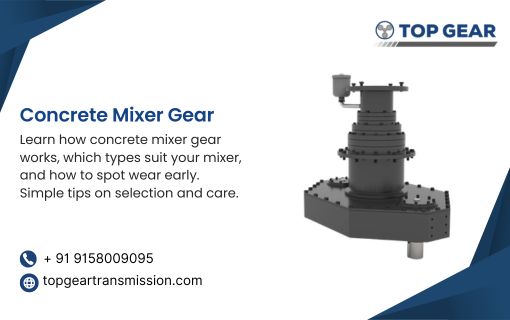

In concrete batching and heavy industrial processing, a planetary mixer gearbox serves as the critical power transmission assembly that delivers high torque at low output speeds under severe mixing resistance. When raw aggregates, cement paste, or viscous slurries are introduced into a mixing vessel, the drive mechanism must maintain steady rotation without stalling under sudden load spikes.
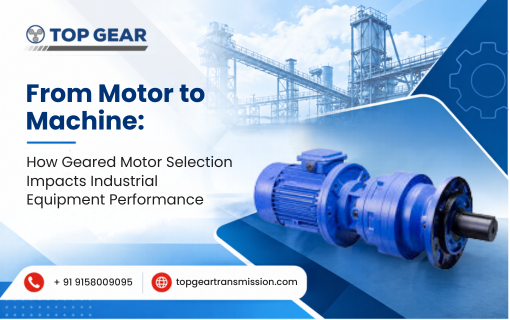
The multi-stage planetary reduction design has become the standard architecture behind reliable concrete and industrial mixer drives. By nesting sun, planet, and ring gear sets within a compact coaxial housing, these gearboxes manage extreme torsional resistance in minimal operational footprints. The same multi-planet load-sharing principles from our planetary vs. helical geared motor guide are what make a mixer gearbox resistant to sudden batching shock loads, ensuring steady power delivery throughout the batching cycle.
Mechanical Profile: Why Planetary Reduction Suits Mixing Loads
Mixing media resistance varies constantly as material consistency changes mid-batch. As dry aggregates transform into dense, low-slump concrete mixtures, the gearbox experiences sudden, unpredictable torque spikes that can cause gear-tooth pitting or shaft shear in improperly rated speed reducers.
A planetary concrete mixer drive addresses this challenge through load distribution. Instead of relying on a single contact point, dynamic torque is split evenly across multiple planet gears orbiting a central sun gear.
Contrasting this design against a traditional single-mesh worm drive highlights why planetary architecture excels in heavy-duty applications:
- Planetary Mixer Gearbox: Shares shock loads across three or more planet gears simultaneously, drastically reducing localized tooth stress. This structural arrangement provides high mechanical stiffness, superior torsional rigidity, and enhanced durability during severe start-stop cycles under full load.
- Single-Mesh Worm Drive: Concentrates all transmitted torque onto one contact point between the worm screw and worm wheel. Under sudden aggregate shock loads, this concentrated stress point is prone to accelerated wear, tooth stripping, and excessive thermal buildup.
Comparative Matrix: Planetary Mixer Gearbox vs. Standard Worm Mixer Drive
The following technical comparison outlines the performance differences between planetary mixer gearboxes and standard worm gear drives:
| Feature | Planetary Mixer Gearbox | Standard Worm Mixer Drive |
| Shock Load Tolerance | High, multi-gear load sharing prevents tooth shear | Lower, single-contact-point stress leads to tooth wear |
| Mechanical Efficiency | 92%–96% per stage, maximizing energy conversion | 65%–85%, lost to heat-generating sliding contact |
| Housing Footprint | Compact, coaxial vertical mount saving plant space | Larger, right-angle offset layout requiring more room |
| Duty Cycle Suitability | Continuous, high-cycle batching under heavy loads | Intermittent, lighter-duty mixing applications |
Sourcing and Customization for Indian Batching Plants
High ambient summer temperatures, fine abrasive cement dust, and continuous multi-shift production schedules at Indian ready-mix concrete (RMC) and precast plants demand reinforced sealing and thermal-rated lubrication beyond a generic catalog unit. Standard imported gearboxes operating without customized thermal protection often experience premature seal breakdown, leading to oil contamination and batching downtime.
Sourcing a concrete mixer gear from an established local manufacturer allows engineering teams to tailor drive specifications directly to plant requirements. Localized customization options include:
- Reinforced Output Shafts: Heavy-duty radial and axial bearing arrangements designed to absorb severe bending moments caused by mixer paddle resistance.
- Flexible Mounting Configurations: Custom vertical or horizontal flange mounts engineered to fit drop-in replacement dimensions for existing batching plant mixer drums, pans, or twin-shaft layouts.
- Specialized Dust Sealing: Multi-lip radial shaft seals and labyrinth dust covers engineered to keep fine particulate slurry and airborne cement dust from entering the oil bath.
Industrial Applications: Where Planetary Mixer Gearboxes Are Used
Ready-Mix Concrete (RMC) Plants
High-cycle RMC batching drums require consistent torque output across varying slump specifications. Planetary mixer gearboxes maintain constant mixing speeds whether handling high-fluidity self-consolidating concrete or stiff, low-slump mixes.
Precast Concrete Production
Twin-shaft and planetary counter-current mixers used in precast pipe, block, and structural element production demand precise, repeatable torque delivery. Consistent mixing speeds ensure uniform aggregate distribution and batch-to-batch mold quality.
Chemical and Food-Grade Mixing Systems
Sealed planetary housings are frequently adapted for viscous chemical polymers, paints, adhesives, and food-grade dough mixing systems. The compact vertical profile and high torque density allow for neat integration above sealed process vessels.
Conclusion: Ensuring Reliable Batching Performance
Maintaining consistent batching output and preventing unexpected plant downtime depends on selecting a correctly sized planetary reduction drive equipped with application-specific sealing. Partnering with a proven industrial manufacturer like Top Gear Transmission guarantees that your facility receives high-torque, shock-resistant mixer gearboxes built for demanding operational cycles.
Ready to specify a shock-resistant planetary mixer gearbox for your batching plant? View our Planetary Mixer Product Page or send your batch size and cycle data to our engineering team for a custom assessment.
Frequently Asked Questions
Q1: Why is a planetary mixer gearbox better suited to concrete batching than a worm drive?
Answer: A planetary mixer gearbox shares torque across multiple planet gears simultaneously, so it absorbs the sudden load spikes of shifting concrete consistency far better than a worm drive, which concentrates all stress on a single tooth contact.
Q2: What causes premature failure in a planetary concrete mixer drive?
Answer: A planetary concrete mixer drive typically fails early when it is undersized for the batch weight or when seals are not rated for the cement dust and ambient heat found at continuous-duty batching plants.
Q3: Can a concrete mixer gear be customized for an existing batching plant layout?
Answer: Yes, a concrete mixer gear can be built with a reinforced output shaft and either vertical or horizontal mounting to match retrofit requirements at an existing ready-mix or precast plant.
Q4: How does duty cycle affect planetary mixer gearbox selection?
Answer: A continuous, high-cycle batching operation needs a planetary mixer gearbox rated for sustained thermal load, while lighter, intermittent mixing can typically use a lower service-factor unit.