

High-Performance Assembly Gearbox for Modern Automation
In the modern industrial landscape, the push toward “Industry 4.0” has turned assembly lines into high-speed, hyper-precise ecosystems. At the core of this transformation is a component that often goes unnoticed until it fails: the assembly gearbox. Whether it is a robotic arm in an automotive plant or a high-speed filling line in a pharmaceutical facility, the gearbox assembly is the bridge between raw electrical power and controlled mechanical motion. This comprehensive guide explores the nuances of assembly gearboxes, their technical importance in industrial automation, and how to select the right system for peak performance. Defining the Assembly Gearbox in Automation An assembly gearbox is more than just a collection of gears; it is a sophisticated mechanical transmission system designed to modify the output of an electric motor. Its primary functions are to reduce speed and increase torque while maintaining the highest possible level of positional accuracy. In the context of industrial automation, “assembly” refers to the integrated nature of these units. Unlike standalone gears, an assembly gearbox is often pre-engineered to interface perfectly with servo motors or AC/DC motors, providing a “plug-and-play” solution for complex machinery. Why Gearboxes are Non-Negotiable Without a high-quality gearbox, a motor would have to be prohibitively large to generate the torque required to move heavy industrial loads. The gearbox allows engineers to use smaller, more efficient motors that run at higher speeds, which the gearbox then converts into the powerful, slow-moving force needed for heavy lifting or precise positioning. Key Types of Gearbox Assemblies Different automation tasks require different mechanical behaviors. Understanding the “anatomy” of these gearboxes helps in choosing the right one for your specific assembly line. A. Servo Planetary Gearboxes The “gold standard” for precision automation. In a planetary system, a central “sun” gear drives multiple “planet” gears contained within an outer “ring” gear. B. Helical Gear Assemblies Helical gears are cut at an angle to the face of the gear. This allows the teeth to engage gradually rather than all at once. C. Worm Gear Reducers Worm gears consist of a “worm” (a gear in the form of a screw) that meshes with a “worm wheel.” D. Right-Angle Gearboxes In many automation setups, space is a luxury. Right-angle gearboxes allow the motor to be mounted perpendicular to the drive shaft, saving significant floor space. The Role of Precision in Industrial Automation When we look at the specifications of a high-end assembly gearbox, two terms appear constantly: Backlash and Torsional Stiffness. Understanding Backlash Backlash is the amount of clearance between mated gear teeth. In a standard gearbox, a little backlash is fine. However, in an automated assembly gearbox, backlash must be near zero. Why? Imagine a robotic arm welding a car frame. If there is even a 0.5-degree “play” in the gearbox, the weld could be several millimeters off-target, resulting in a scrapped part. Efficiency and Thermal Management Modern gearboxes, such as those featured by industry leaders like Top Gear Corporation Limited, are designed for 95% to 98% efficiency. Higher efficiency means less energy is lost as heat. In 24/7 manufacturing environments, excessive heat can break down lubricants and lead to premature bearing failure. Critical Applications Across Industries The “assembly gearbox” is a versatile tool found in nearly every sector of the global economy: 1. Automotive Manufacturing From the stamping press to the final assembly line, gearboxes drive the heavy-duty conveyors and the precise robotic welders that build our vehicles. The high radial load capacity of planetary gearboxes makes them ideal for handling heavy car chassis. 2. Food and Beverage In this industry, gearboxes must be both precise and hygienic. Stainless steel assembly gearboxes with specialized coatings are used in bottling and packaging lines to ensure they can withstand high-pressure washdowns without rusting or leaking oil into the product. 3. Pharmaceuticals Precision is the top priority here. Gearboxes drive the machines that blister-pack pills or fill vials at speeds of thousands of units per hour. Any vibration or loss of synchronization could result in damaged medication or incorrect dosages. 4. Material Handling and Warehousing With the rise of automated warehouses (like those used by Amazon), assembly gearboxes power the automated guided vehicles (AGVs) and sorting systems that move millions of packages daily. How to Select the Perfect Assembly Gearbox Choosing a gearbox isn’t just about picking a ratio; it’s about analyzing the entire mechanical system. Here is a checklist for engineers and procurement managers: Maintenance: Ensuring Longevity Even the best-engineered assembly gearbox requires care. To avoid unplanned downtime, follow these three pillars of maintenance: The Future: Smart Gearboxes and Industry 4.0 The next generation of assembly gearboxes is getting “smart.” We are now seeing the integration of IoT sensors directly into the gearbox housing. These sensors monitor temperature, torque, and vibration in real-time, sending data to the cloud. This allows for Predictive Maintenance, where the machine itself tells the operator, “I need a part replaced in 200 hours,” rather than waiting for a catastrophic breakdown. Conclusion: Driving the Future of Production The assembly gearbox is the silent workhorse of the industrial world. As automation becomes more complex, the demands on these mechanical systems will only increase. By selecting high-quality, high-precision gearboxes, manufacturers can ensure their operations are faster, more accurate, and more cost-effective. When you invest in a superior gearbox assembly, you aren’t just buying hardware you are buying the reliability and precision that keeps your production line moving toward the future.
Shaft Mounted Gearbox: Uses, Benefits & Buying Guide
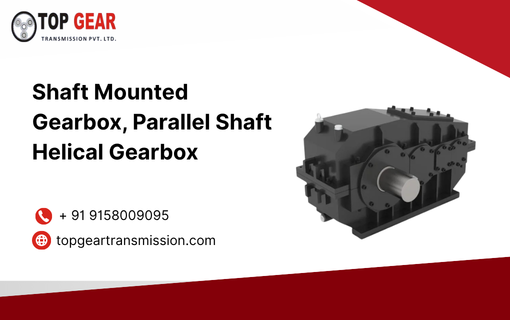
Operational efficiency and reliability are among the cornerstones of modern industrial operations. However, no manufacturer inherits them. Each one must earn it. In today’s highly competitive world, accomplishing these goals isn’t possible with archaic systems and equipment. You need an innovative solution. This is where shaft mounted gearboxes come into play. Lately, they’ve emerged as the top choice for every manufacturing company that handles heavy-duty machines. Thanks to their simplicity, durability, and high performance. But what exactly is a shaft mounted gearbox? What are its applications, and how can you benefit from them? Here’s a blog that breaks down these aspects to serve as a buying guide. What is a Shafted Mounted Gearbox? A shafted mounted gearbox is an industrial speed reducer installed onto the driven shaft of a machine. Therefore, it eliminates the need for a complex base mounting or making coupling arrangements. The gearbox is commonly used in systems where space-saving, minimal maintenance, and ease of mounting are crucial factors. Furthermore, since the gearbox shifts on the shaft, it reduces misalignment issues and helps enhance the overall system reliability. Working Principle and Design The main purpose of a shafted mounted gearbox is to reduce input speed, while increasing torque output. Here’s how it functions. Some key design features of these gearboxes include: Let us now look at some of the types of gearboxes. Types of Shafted Mounted Gearboxes Top-tier industrial gearbox manufacturers manufacture a wide range of shafted mounted gearboxes. Two popular choices include: This gearbox features parallel input and output shafts. Hence, it is used in applications that require high torque, consistent performance, and continuous duty operations. The gearbox has a compact design and high load-carrying capacity. Such a gearbox uses helical gears. They are angled tooth gears that operate more smoothly and quietly than spur gears. The gearbox also delivers higher efficiency, ensures better load distribution, and provides a longer service life. Hence, industrial operations that require precision and durability prefer this type of gearbox. Advantages of Shafted Mounted Gearboxes From high efficiency to ease of installation and low maintenance, here’s why shafted mounted gearboxes are among the premier choices of modern industrial operations. The above benefits make shafted mounted gearboxes integral to various applications. Let us look at some of them in the next section. Applications of Shafted Mounted Gearboxes Shafted mounted gearboxes aren’t just efficient and durable but also versatile. Hence, they have widespread applications across the industrial world, including: How to Choose the Right Gearbox Company in India Selecting the right gearbox company in India is crucial from the viewpoint of performance, durability, quality, and maintenance. So, here are some factors to consider while choosing industrial gearbox manufacturers. Final Words In a world where efficiency and power matter, shafted mounted gearboxes play a crucial role. Besides, they are easy to install, durable, and deliver superior performance. So, if you are from the material handling, mining, or food processing industry and looking for shaft mounted gearbox systems, Top Gear Transmission has got you covered. We are one of the top industrial gearbox manufacturers with a broad product range, market credibility, experience, client trust, and a reputation for quality. Explore our product range and connect with us at sales@topgeartransmission.com to discuss your requirements with our product specialists.
Why Cycloidal Gearboxes Are Ideal for High Torque Applications
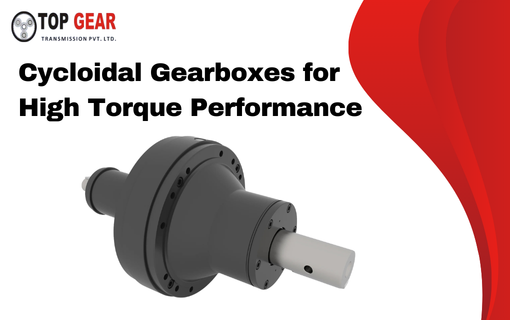
In the industry of today, there is a need to attain high levels of output in terms of torque reliability, and efficiency. Industries such as robotics, automation, heavy machinery, and material handling require reliable power transmission systems. These systems must handle heavy loads without compromising precision. Among other technologies that have proven to be unique in these challenging applications is the Cycloidal Gearboxes system. Cycloidal gear mechanisms have a reputation of being exceptional in terms of torque capacity, compact in nature and enduring. They are very popular in the industrial arena where they are extensively employed in high-tech activities. Such firms as Top Gear Transmission are offering the quality cycloidal gears solutions which are effective in rendering optimum performance in the harsh environment. Understanding Cycloidal Gearboxes Cycloidal Gearboxes are known to work on a different mechanism that is quite different to the traditional gear system. A cycloidal gearbox involves an eccentric shaft and discs of cycloidal teeth which roll against pins within the housing instead of the normal engagement of traditional gear teeth. This motion reduces speed and multiplies torque efficiently. The system distributes the load across multiple contact points at the same time. This design allows the gearbox to handle much higher torque than traditional gear systems. This new mechanism is the guarantee of the smoothing of operation, high efficiency, and extended service. High Torque Density in Compact Design High torque density is one of the main reasons industries choose Cycloidal Gearboxes for demanding applications. Torque density refers to the amount of torque a gearbox can deliver compared to its size. The unique design of cycloidal gear mechanisms allows multiple lobes or contact points to share the load at the same time. This design improves load distribution and increases torque capacity.This distributes the pressure evenly through the system and enables the gearbox to be able to transmit more torque without the need to be larger. This small high power design can be of great value to industries that do not have much space but need a lot of power. Exceptional Shock Load Resistance Impulse loads or impacting forces are typical in heavy service industrial work. Traditional gear systems may fail when they face extreme shock or heavy load conditions. However, cycloidal gear systems handle high shock loads more effectively. Their design spreads the load across multiple contact points instead of a few gear teeth. This structure allows the system to absorb sudden forces more efficiently. There are situations when these gearboxes can withstand shock loads that are more than the specified torque carrying capacity. This makes them suitable for demanding equipment such as cranes, conveyors, robotic systems, and heavy industrial machinery. Minimal Backlash and High Precision Backlash refers to the slight movement between gear teeth when the direction of motion changes. Too much backlash may cause a lack of accuracy and efficiency in mechanical systems. The cycloidal gear designs have a large contact ratio with a high precision engineering and thus a high reduction of backlash. The outcome of this is very precise motion control and positioning. This precision is particularly vital in tasks such as robotics, CNC machines, and automated production systems where a few centimeters of positioning mistakes can have a significant impact. Improved Efficiency and Long Service Life One more benefit of cycloidal gear systems is that they are highly efficient and durable. Friction and wear are minimised by the rolling movement of components as opposed to the traditional sliding gear mechanisms. Due to this design, Cycloidal Gearboxes are smooth in operation, need low maintenance and have extended life. There are also models that achieve efficiency of above 90 percent and hence are efficient in terms of energy consumption in industrial operations. These gearboxes can be used with many years of maintenance under the conditions of constant heavy load. Versatile Industrial Applications Due to their durability and torque capacity, cycloidal gear systems are used in a wide range of industries, including: The combination of compact size, high reduction ratios, and reliable performance makes them suitable for both precision and heavy-load applications. High-Performance Solutions from Top Gear Transmission When selecting a gearbox for high torque applications, reliability and quality become critical factors. Top Gear Transmission offers high-performance cycloidal gearboxes designed to meet the demanding needs of modern industries. The company engineers these gearboxes with precision components, high torsional rigidity, and low backlash. This design ensures efficient operation and accurate performance. These gear systems offer high transmission ratios even in compact sizes. They are designed for durability and reliable performance. Their design also helps reduce maintenance requirements. Top Gear Transmission has strong engineering expertise and extensive industry experience. The company continues to deliver reliable power transmission solutions. These solutions support automation, manufacturing, and heavy machinery industries. Conclusion Gears used in high torque operations must be robust, accurate and reliable. One of the most effective solutions to such a demanding environment has been the technology of cycloidal gear. Its benefits such as high torque density, shock loads resistance, compactness, and low backlash can make one easily understand why Cycloidal Gearboxes have found extensive application in various sectors. The use of reputable manufacturers such as Top Gear Transmission will enable businesses to obtain long-lasting and high-performance gear solutions that can maintain the operations of the modern industries.
Common Gearbox Problems and How to Solve Them
Industrial gearboxes are critical components in the operation of manufacturing units, automation systems, material handling, and energy production. Despite their robust design, gearboxes can encounter performance issues due to environmental, operational, or maintenance-related factors. In this guide, India’s trusted gearbox manufacturing company, Top Gear Transmission, explores the most common gearbox problems and how to effectively resolve them. Common Industrial Gearbox Problems, Types & Their Causes Now, let’s explore the common problems that can occur in these gearboxes and how to solve them: 1. Overheating Symptoms: High casing temperature, unusual smell, reduced efficiencyCauses: Solution: 2. Excessive Noise or Vibration Symptoms: Humming, knocking, or grinding noise during operationCauses: Solution: 3. Lubrication Leaks Symptoms: Oil stains, low lubricant levels, overheatingCauses: Solution: 4. Gear Wear or Scoring Symptoms: Metal particles in oil, loud operation, drop in torqueCauses: Solution: 5. Misalignment Issues Symptoms: Coupling failure, shaft wear, vibrationCauses: Solution: Preventive Maintenance Tips Why Choose Top Gear Transmission? As a trusted gearbox company in India, Top Gear Transmission is known for: Main types of industrial gearboxes: FAQs Q1: How often should industrial gearboxes be serviced? A: Typically every 3–6 months depending on operating conditions. Q2: What type of gearbox is best for heavy loads? A: Planetary and helical gearboxes are ideal due to their high torque capacity and load distribution. Q3: How do I know if my gearbox is failing? A: Signs include noise, overheating, oil leakage, and reduced performance.
How to Choose the Right Gearbox for Your Application

Lorem Ipsum is simply dummy text of the printing and typesetting industry. Lorem Ipsum has been the industry’s standard dummy text ever since the 1500s, when an unknown printer took a galley of type and scrambled it to make a type specimen book. It has survived not only five centuries, but also the leap into electronic typesetting, remaining essentially unchanged. It was popularised in the 1960s with the release of Letraset sheets containing Lorem Ipsum passages, and more recently with desktop publishing software like Aldus PageMaker including versions of Lorem Ipsum. FAQs What factors should I consider when selecting a gearbox for my application? When choosing a gearbox, consider factors such as load capacity, torque requirements, speed range, environmental conditions, and the type of application. Understanding these parameters helps in selecting a gearbox that meets your specific needs and ensures optimal performance. How do I determine the right gearbox size for my application? To determine the right gearbox size, calculate the input power and output torque required for your application. It’s essential to consider the gear ratio and the efficiency of the gearbox to ensure it can handle the operational demands effectively. What are the different types of gearboxes available for industrial applications? Common types of gearboxes include helical, bevel, worm, and planetary gearboxes. Each type offers unique benefits; for instance, planetary gearboxes provide high torque in a compact design, while helical gearboxes offer smooth operation and high efficiency. How can I ensure my chosen gearbox is suitable for high-speed applications? For high-speed applications, select a gearbox designed specifically for such conditions, paying attention to gear materials, lubrication, and cooling systems. Reviewing the manufacturer’s specifications and performance data can also help ensure the gearbox can handle the required speed. Should I consider gearbox maintenance requirements when choosing a gearbox? Yes, considering maintenance requirements is crucial when selecting a gearbox. Look for gearboxes that offer easy access for maintenance, and review the recommended service intervals. Proper maintenance can significantly enhance the lifespan and reliability of the gearbox in your application.
Understanding Types of Gearbox: A Comprehensive Guide

What is a Gearbox? A gearbox is a mechanical system that transmits power from a motor to a machine, adjusting the torque and speed through gear reduction or multiplication. It plays a crucial role in optimizing performance, especially in industrial equipment, by matching power output with operational requirements. Types of Gearbox and Their Applications Explore the most common gearbox types used across industries, along with their working principles, benefits, and ideal use cases. There are generally 6 main types of gearboxes commonly used across industrial and mechanical applications. 1. Helical Gearbox How It Works: Uses angled teeth that engage gradually, providing smooth and quiet operation. Applications: Advantages: 2. Planetary Gearbox How It Works: Features a central sun gear, rotating planet gears, and an outer ring gear. Distributes load evenly for high torque in a compact design. Applications: Advantages: 3. Worm Gearbox How It Works: A worm screw engages with a worm wheel to reduce speed and transmit motion at 90 degrees. Applications: Advantages: 4. Bevel Gearbox How It Works: Uses bevel gears to change rotational direction, typically at a 90-degree angle. Applications: Advantages: 5. Spur Gearbox How It Works: Straight-cut teeth mounted on parallel shafts. Basic and cost-effective. Applications: Advantages: 6. Cycloidal Gearbox How It Works: Replaces traditional gears with a cycloidal disc and rollers, enhancing torque and precision. Applications: Advantages: How to Select the Right Gearbox When choosing a gearbox, consider the following: Conclusion Different gearbox types serve distinct purposes. Choosing the right one can boost efficiency, reduce downtime, and extend equipment life. At Top Gear Transmission, we provide expert support to match the ideal gearbox with your specific application. FAQs Q1: What is the most efficient gearbox type? Planetary gearboxes are among the most efficient, with up to 97% efficiency. Q2: Can gearboxes be customized for specific needs? Yes, at Top Gear Transmission, we offer custom designs based on torque, mounting, and operational requirements. Q3: What industries use gearboxes the most? Gearboxes are widely used in robotics, packaging, agriculture, construction, and renewable energy sectors.
Do You Wonder What Our PLANETARY GEAR SETS & How Are The GEAR RATIOS Derived…
The planetary gear set mostly consists of Four main parts as shown in Figure Below. Sun gear Planet gear Ring gear Carrier Each of these components can be the input, the output, or can be held stationary. Depending upon input, output, and stationery element the following gear ratios can be calculated. S.No. Input Output Stationary Ratio A Sun (S) Planet Carrier (C) Ring (R) 1 + R/S B Planet Carrier (C) Ring (R) Sun (S) 1 / (1 + S/R) C Sun (S) Ring (R) Planet Carrier (C) -R/S Holding any two components together will deliver 1:1 gear reduction. The first gear ratio listed above is a reduction where the output speed is slower than the input speed. The second is an overdrive, where the output speed is faster than the input speed. The last is also reduction but with opposite output direction (hence represented by negative sign). As most of the industrial applications demand speed reduction, our concern is with only the first type of reduction where the ring gear is held stationary. Input is given through the sun gear and output is the planet carrier. Let’s look in detail how the Gear ratio is derived for this kind of reduction From the basic law of planetary gear set we have, rr= rs + dp, rr=rs+ 2rp 2rp= rr-rs – (Eqn. 1) Where, rr= Radius of Ring Gear, rs = Radius of Sun Gear, dp = Diameter of Pinion Gear rp = Radius of Planetary Gear Now, we know Linear velocity ‘V’= Angular velocity x Radius = N x r (as ω = 2πN) Therefore, For an object moving in circle its Linear velocity is V= N x r In planetary gear set, as the input is connected to sun gear and output is given to carrier Gear ratio ‘i’= Ns/Nc Where, Ns= Speed of Sun Gear, Nc= Speed of Carrier Linear Velocity of the carrier is angular velocity x distance from the centre Vc= Nc x (rs + rp) – (Eqn. 2) The instantaneous linear velocity of the point of contact between sun and planet is Vs= Ns x rs – (Eqn. 3) Also, instantaneous velocity equals to twice the velocity of carrier Vs= 2Vc= 2Nc x (rs + rp) – (Eqn. 4) Equating Eqn. 3 and Eqn.4 we get, Ns x rs = 2 x Nc x (rs + rp) i = Ns/Nc = 2 x (rs + rp) / rs = 2rs + 2rp / rs From Equation 1 we have, 2rp= rr – rs, =(2 rs + rr – rs)/ rs = (rs + rr) / rs =1 + rr / rs = 1 + Zr/Zs Here, Zr is No. Of teeth on Ring Gear, Zs is No. Of teeth on sun gear. Hence Gear ratio for planetary gear set is, Ratio of Number of teeth of ring gear to number of teeth of Sun gear plus One. In this way the gear ratio for planetary gear set is derived…!!