A robot moves only as well as its transmission lets it. The motor creates rotation, but the gearing turns that rotation into useful force and accurate position. Every joint in a robot arm depends on this link.
Robotic transmission systems have to do three jobs at once. They multiply torque, reduce speed and hold position with very little error. Each job pulls against the others, so design is always a compromise.
At Top Gear Corporation, we build planetary and cycloidal drives for automation machinery. This guide explains how torque, speed and precision gearing shape a robotic transmission. For the servo side of the story, read our post on choosing the right gearbox for servo motor applications.
What a Robotic Transmission System Does
A robotic transmission system carries power from the motor to the moving link of a robot. In most joints it contains a gear reducer, bearings, a shaft and often a brake and an encoder.
The reducer does the heavy work. A servo motor turns fast and produces modest torque. A robot arm needs the reverse, which is high torque at a controlled and lower speed.
The reducer closes this gap. It also decides how much error reaches the tool at the end of the arm.
Where the Transmission Sits in a Robot Joint
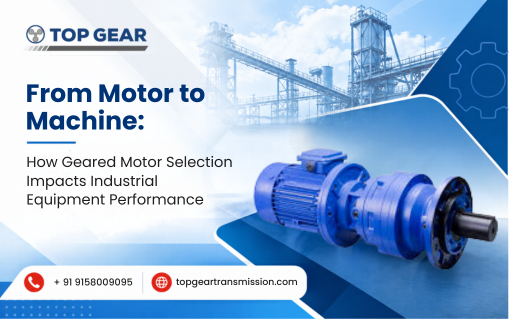
Most robot joints use a compact stack. The motor sits on one side, the reducer in the middle and the output flange on the other side. This layout keeps the joint short and light.
Weight matters because each joint carries the weight of every joint beyond it. A heavy transmission at the wrist forces larger motors at the shoulder. Compact gearing therefore gives a benefit that spreads through the whole arm.
Right angle layouts help in tight spaces. Our bevel planetary drives turn the output axis ninety degrees from the input, which suits machines with limited room behind the joint.
Torque in Robotic Transmissions
Torque is the turning force the transmission delivers to the link. Robot designers work with three torque values. These are the rated torque, the peak torque and the momentary maximum torque.
Rated torque is the level the gearing can carry for its full design life. Peak torque appears during fast acceleration and braking. Momentary maximum torque covers rare events such as an emergency stop or a collision.
A transmission must survive all three. Sizing from the rated value alone leaves the gears exposed during acceleration. Sizing from the peak value alone can lead to a reducer that is far too large.
Thermal life depends on the average torque over a full work cycle. Engineers often use the root mean square value to capture this. A joint that moves a heavy payload for most of the cycle runs hotter than one that moves a light payload.
Speed and Reduction Ratio
Reduction ratio links motor speed to joint speed. A higher ratio lowers the joint speed and raises the torque by nearly the same factor. It also lets a smaller motor drive the same load.
Ratio has a second effect that designers value. The load inertia seen by the motor falls with the square of the ratio. A high ratio therefore makes a heavy link feel lighter to the motor and eases control.
Higher ratios cost speed, so the choice depends on the task. A pick and place arm needs quick moves and a moderate ratio. A slow positioning axis under heavy load needs a high ratio.
A single planetary stage commonly covers ratios from about three to ten. Multi stage units reach much higher values. Each extra stage adds a small efficiency loss and a small amount of lost motion, so engineers use the fewest stages that meet the target.
Precision Gearing and Lost Motion
Precision in a robot has more than one meaning. Accuracy is how close the tool gets to the commanded point. Repeatability is how closely it returns to the same point on every cycle.
Gearing affects both. Free play between teeth and the twisting of the gear train under load cause position error. We explain backlash, stiffness and inertia matching in detail in our servo gearbox guide, so we will not repeat that here.
Two other gear effects deserve attention in robotics. The first is transmission error, which is the small position difference between input and output caused by tooth profile and spacing errors. It repeats once per turn and shows up as vibration.
The second is torque ripple. Tooth meshing produces a slight variation in output torque as each tooth engages. A smooth gear design reduces this ripple and gives cleaner motion at low speed.
Wear also changes precision. Free play grows as teeth wear, so a gear train that is accurate on day one can drift over millions of cycles. Hardened gear teeth and correct lubrication slow this drift.
Matching Gear Types to Robot Axes
No single gear type suits every axis. Each type offers a different balance of stiffness, shock tolerance, size and cost.
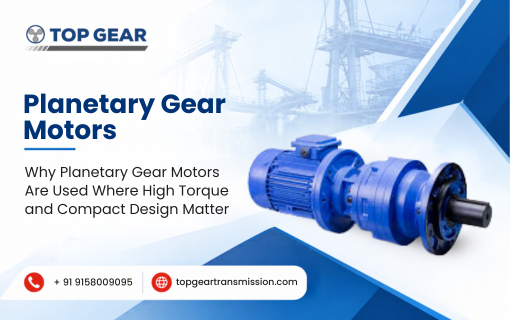
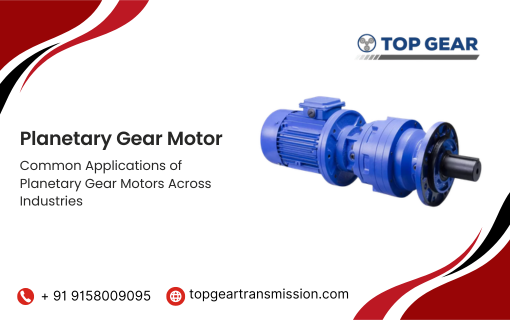
Planetary reducers share load across several planet gears. They give good stiffness, high efficiency and a compact body. Our servo planetary gear reducers serve axes that need accurate positioning and quick response.
Cycloidal drives use rolling contact between a lobed disc and pins. This design handles shock loads very well and resists tooth breakage. Our cycloidal gearbox range suits base and heavy axes, and our guide to cycloidal gearboxes and shock resistance covers the design in depth.
Worm drives offer high ratios in a small space and can hold a load without power. Their efficiency is lower and they resist being driven backward. They fit slow axes that need self holding more than speed. Our worm planetary drives combine a worm stage with planetary output.
Efficiency, Heat and Backdrivability
Efficiency decides how much of the motor power reaches the load. A planetary stage typically passes most of its input power forward, while worm stages lose a larger share. Lost power becomes heat inside the joint.
Heat is a real limit in a sealed robot joint. Rising temperature thins the lubricant and softens the grease in the bearings. It can also shift the position of the encoder and the gears.
Backdrivability is the ability of the output to turn the input when an outside force pushes on the link. High backdrivability helps in collaborative robots, because the arm gives way when it meets a person or an obstacle. Low backdrivability helps where the arm must hold position without power.
Designers choose between these behaviours on purpose. The right choice depends on the safety needs and the task of each axis.
Mass, Inertia and Compactness
Torque density describes how much torque a reducer delivers for each kilogram of its own mass. Robots reward high torque density, because every kilogram saved at the wrist reduces the load on every joint behind it.
Rotating mass matters as much as total mass. Inertia inside the reducer adds to the work the motor must do on every acceleration. Compact, light gear trains reduce this burden and allow faster cycles.
A planetary layout scores well on both counts. Load sharing across planets lets the housing stay small for a given torque, and the coaxial layout keeps the joint slim.
Maintenance and Wear Over Time
Robot transmissions run for long hours and often in sealed housings. Lubricant condition is therefore the main driver of life. Follow the oil or grease interval set by the manufacturer and keep the seals in good order.
Monitor the signs of wear. Rising noise, a new vibration, a creeping temperature or a growing position error each point to a worn drive. Catching these signs early allows planned replacement instead of an unplanned stop.
Keep the loads inside the rated limits. Frequent collisions or overload events shorten the life of any gear set.
Choosing a Robotic Transmission
Begin with the payload, the reach and the motion profile of each axis. From these, calculate the rated, peak and average torque. Then set the speed range and the ratio that fits it.
Next, decide how much precision each axis needs. Fine positioning axes call for stiff, low play planetary or cycloidal drives. Axes that only move material can accept a simpler gear train.
Finally, check the space, the weight limit and the operating environment. Dust, washdown and heat all affect the choice of seals and lubricant. Our planetary gearbox range offers several configurations to fit these limits. Machine builders in industrial automation use the same selection steps.
How Top Gear Corporation Supports Robotics and Automation
We review torque, speed, precision and space for every enquiry. We also build special drives where a standard gearbox does not fit the machine.
Send your motor and load data to sales@topgeartransmission.com or call +91-2162-240642. Our engineers will recommend a reducer and a ratio for your axis.
Frequently Asked Questions
What is a robotic transmission system?
A robotic transmission system carries power from the motor to the moving link of a robot. It usually includes a gear reducer, bearings, a shaft and often a brake.
Why do robots need gear reducers?
Motors turn fast and produce low torque. A reducer lowers speed and raises torque so the arm can move loads with control.
What is the difference between rated torque and peak torque?
Rated torque is the level a gear set carries for its full design life. Peak torque is a short higher value that appears during acceleration and braking.
How does reduction ratio affect robot speed and torque?
A higher ratio lowers joint speed and raises torque by nearly the same factor. It also reduces the load inertia seen by the motor.
What is transmission error in a robot gearbox?
Transmission error is the small position difference between input and output caused by gear tooth errors. It repeats once per turn and can cause vibration.